OEM vs ODM vs private label vs white label
Four words that get mixed up in every first email. Here is what each one means for ownership, speed, cost and exclusivity.
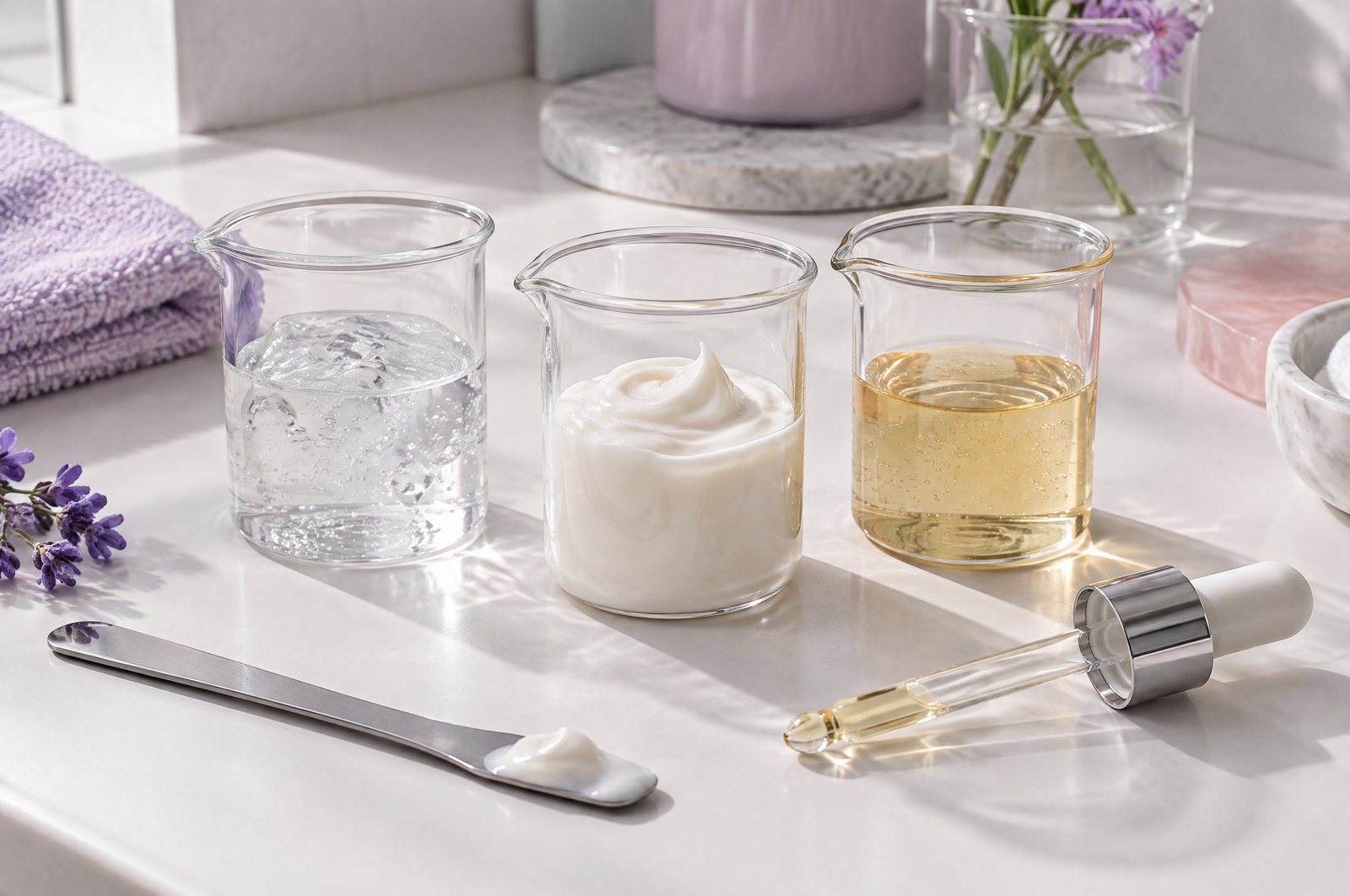
OEM: you specify, the factory makes
Original equipment manufacturing means the manufacturer produces a product to your specification and under your brand. In skincare that specification is the formula, the container, the decoration and the documents. You may bring the formula yourself, or you may have it developed and then own the result. What defines OEM is that the product is yours and the factory is a maker, not a designer.
ODM: the lab designs it for you
Original design manufacturing adds development. You bring a brief, a benchmark or a claim you want to make, and the lab's chemists build the formula, then fill it. Most Korean skincare projects for new brands are ODM in practice, even when people call them OEM, because the brand does not arrive with a finished formula. The important question in ODM is who owns the formula afterwards. Ask before you start.
Private label: a ready formula with your name
Private label uses a formula the manufacturer already has, in a container it already stocks, with your logo and label. It is the fastest and cheapest route, with small minimums and short sampling, because nothing new is developed. The trade-off is exclusivity: the same base may sit inside other brands' bottles, so your positioning comes from concentration adjustments, packaging, price and story rather than from a secret formula.
White label: the same product for everyone
White label is private label without adjustment. The identical product goes out under several brand names, and the manufacturer changes only the label. It works for gifts, sachets and promotional items, and for testing a market before investing in development. It rarely works as the core of a skincare brand, because a customer can find the same product elsewhere.
Side by side
| Route | Who develops the formula | Exclusive to you | Typical time to production | Cost |
|---|---|---|---|---|
| OEM | You, or a lab on your behalf | Yes | 12 to 16 weeks | Higher, development included |
| ODM | The lab, from your brief | Usually, confirm in writing | 12 to 16 weeks | Medium to higher |
| Private label | The lab, already done | Your version and packaging, not the base | 8 to 10 weeks | Lowest |
| White label | The lab, already done | No | 4 to 6 weeks | Lowest |
How to choose
- First product, tight budget, want to launch this season: private label with a concentrate you can adjust. You get a real product in about ten weeks and learn what your customers want before paying for development.
- You have a claim or a texture no library offers: ODM. Expect a development fee, credited against your order, and three sample rounds.
- You already own a formula: OEM. The lab checks it for manufacturability and your market's rules, then fills it.
- Promotional sachets or gifts: white label, from a few thousand units.