What Korean skincare OEM really costs
MOQ, unit price, samples, packaging and the fees nobody lists. Written by the team that writes the quotes.
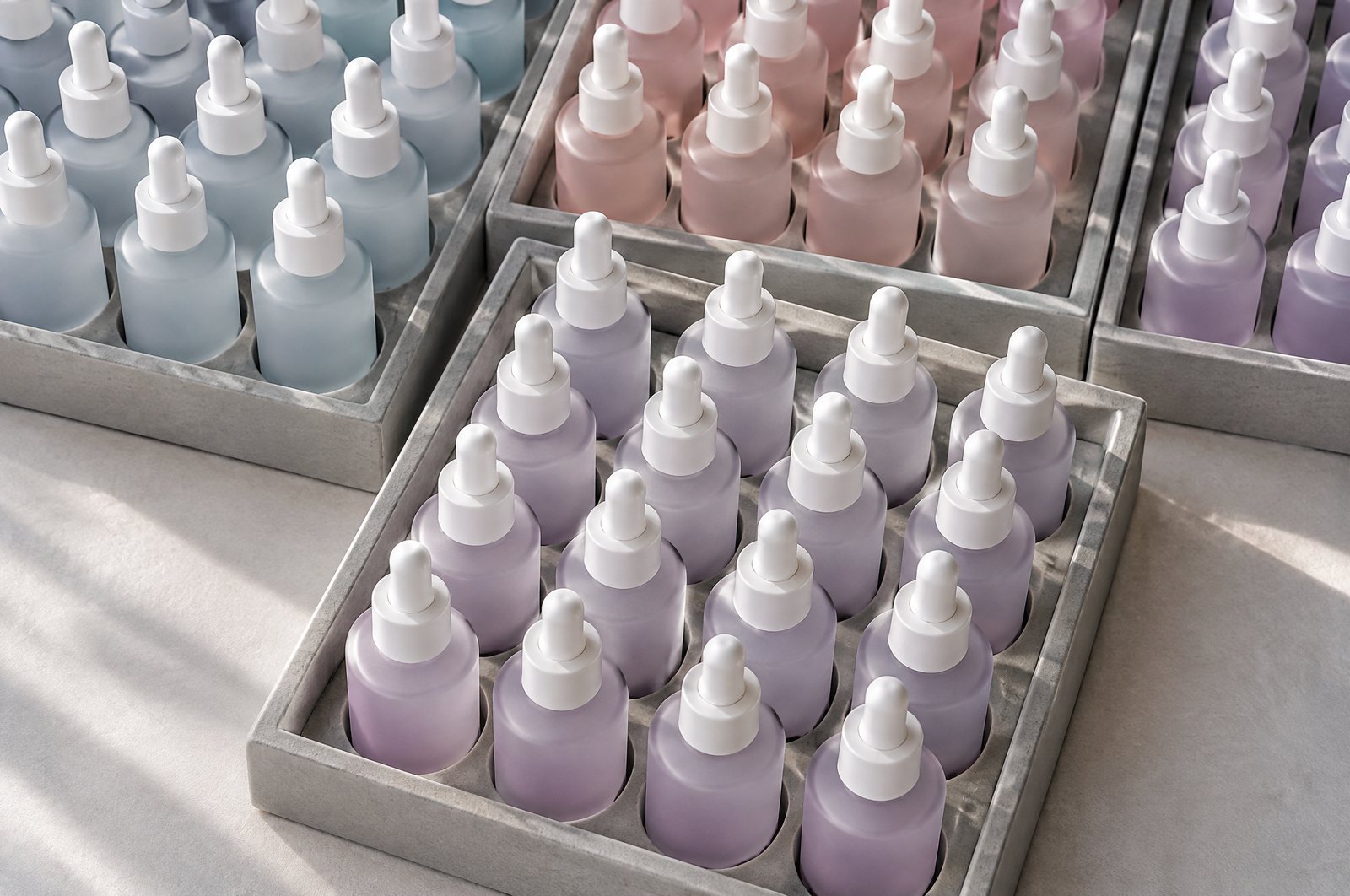
Most first-time brands email a factory with one question, "how much for a serum?", and get no useful answer, because a unit price depends on five decisions they have not made yet. This guide walks through those decisions so you can read a quote, compare two of them, and know what your first run will cost before you ask.
The five things that set a unit price
1. The formula. A library formula the lab already tested is cheaper than a custom development, and a formula with a few strong actives is cheaper than one with twelve. Concentration matters too: a 20% niacinamide serum costs more in raw material than a 5% one.
2. The container. A stock 30 mL dropper bottle is a few cents. A frosted glass jar with an inner lid is more. Airless pumps sit in between. Custom colors, coatings and printing add decoration fees and time.
3. The quantity. Filling lines have set-up time and minimum batch sizes. That fixed cost is spread over the units you order, which is why 1,000 units cost less per unit than 500, and 5,000 far less again.
4. Tests and documents. Stability and microbiology come with every product. A challenge test, a safety assessment, SPF testing or a free sale certificate are added when your market requires them, each with its own price.
5. Where it ships. Ex-works, FOB Busan or delivered to your warehouse are three different numbers. A landed cost includes freight, insurance, duties and the broker.
Typical minimum order quantities in Korea
Large Korean OEM factories usually ask for 3,000 to 10,000 units per product, because their lines are sized for big brands. Platforms that resell factory formulas often list 5,000. Smaller labs that run their own products on the same lines can go lower. At KoreanOEM the minimum is 500 units for most skincare, 1,000 for sheet masks, sunscreen and body wash, and 3,000 for single-dose sachets.
What a first run costs in practice
With a library formula, a stock container and a one-color label, typical filled unit costs for a 500-unit run from a Korean lab run start from about $2 for a toner. A 30 mL serum starts from about $3.70 at 500 units, and the final price depends on the actives, the packaging and the quantity. Multiply by your quantity for the goods, then add three lines: decoration and boxes, tests and documents, and freight.
- 500 units of serum at $4.40: about $2,200 in goods before packaging upgrades and freight.
- 1,000 units: expect roughly 10% less per unit than the 500-unit price.
- 3,000 units: about 20% less. 5,000: about 28% less. 10,000: about 35% less.
These are indicative price breaks for the same formula and packaging. Your written quote shows the exact numbers, and a good quote shows every line so you can remove what you do not need.
Fees that quotes often leave out
- Development fees for custom formulas, usually credited against the first order.
- Sample shipping by courier, and paid sample rounds beyond the ones included.
- Decoration plates and dies for silk screen or hot stamp, charged once per design.
- Testing your market requires, such as a challenge test for the EU file or SPF testing.
- Responsible person services in the EU or UK if you have no local entity.
- Pallets, export packing and documents, and the broker on the receiving side.
None of these are unfair. They are only a problem when they appear after you have compared prices and chosen a partner. Ask for them up front, in writing.
How to compare two quotes
Line them up by the five decisions above. If one quote is ex-works and the other includes freight, they are not comparable yet. If one includes stability testing and the other lists it as optional, add it. Then look at what is not on the paper: sample rounds, revisions, reorder lead time, who owns the formula, and whether your questions are answered by the person who will run the project.