K-beauty private label manufacturer for Dubai: how to launch a Korean-made skincare line in the UAE
The trade license, Dubai Municipality registration, MoIAT conformity, Arabic labels, halal and customs, in the order you meet them when your private label skincare is made in Korea.
To launch a Korean-made private label skincare line in Dubai, form a UAE company licensed for cosmetics, get an importer code, register each product in Dubai Municipality's Montaji system, get a MoIAT certificate of conformity, and label to the Gulf standard, ideally in English and Arabic. Duty is 5%, falling for Korean-origin skincare, plus 5% VAT.
A K-beauty line is made in Korea, so finding a Korean skincare manufacturer in Dubai, or a cosmetic manufacturer in the UAE, really means pairing a Korean factory with a licensed UAE importer. The steps are the same for private label and white label cosmetics in Dubai (this comparison explains the difference). Rules are as of 2026; sources are listed at the end.
Step 1: Set up the company and the licensed importer
Start with a trade license whose activity covers trading cosmetics, issued by your emirate's economic department (in Dubai, the Department of Economy and Tourism) or by a free zone authority. A mainland business needs a physical address, and in Dubai the lease must be registered with Ejari.
To clear goods you need an importer code (Dubai Customs calls it a customs business code), and a free zone company selling into the mainland files a customs declaration as goods leave the zone. Online sellers need a Dubai e-commerce license, even when orders ship from abroad.
The company that registers a product is responsible for its safety and for every document filed. If a distributor registers for you, agree in writing who keeps the registrations if you part ways. File the brand as a trademark with the Ministry of Economy and Tourism too; a trade name is not a trademark.
Who does what
| Task | Korean manufacturer | UAE company |
|---|---|---|
| Formula, samples, production | Makes them | Approves |
| Ingredient report, free sale certificate, certificate of analysis | Prepares | Files them |
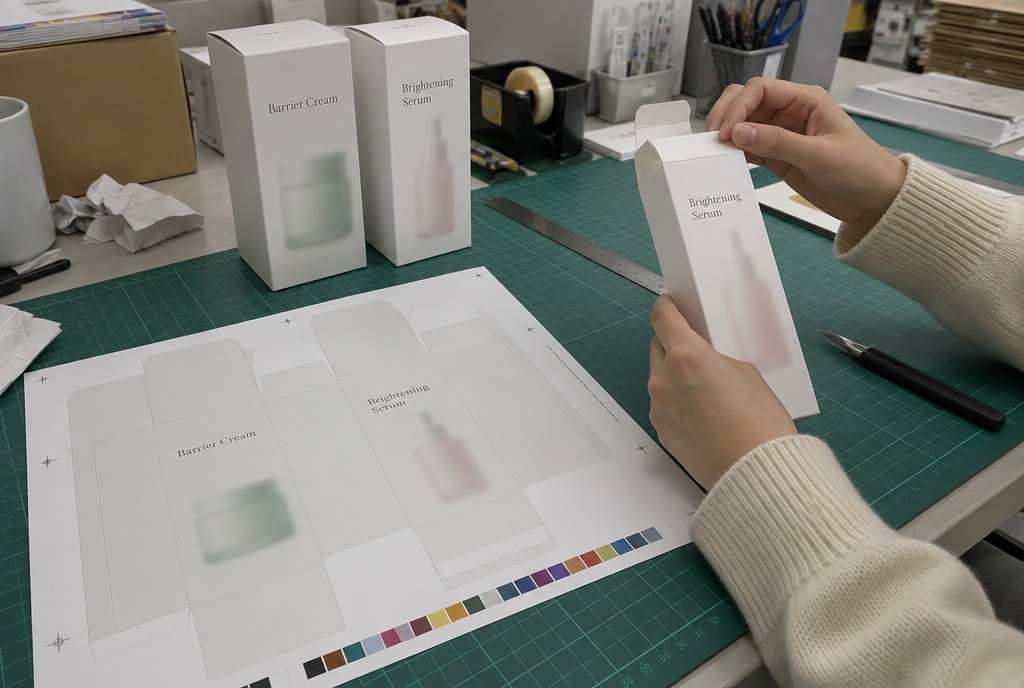
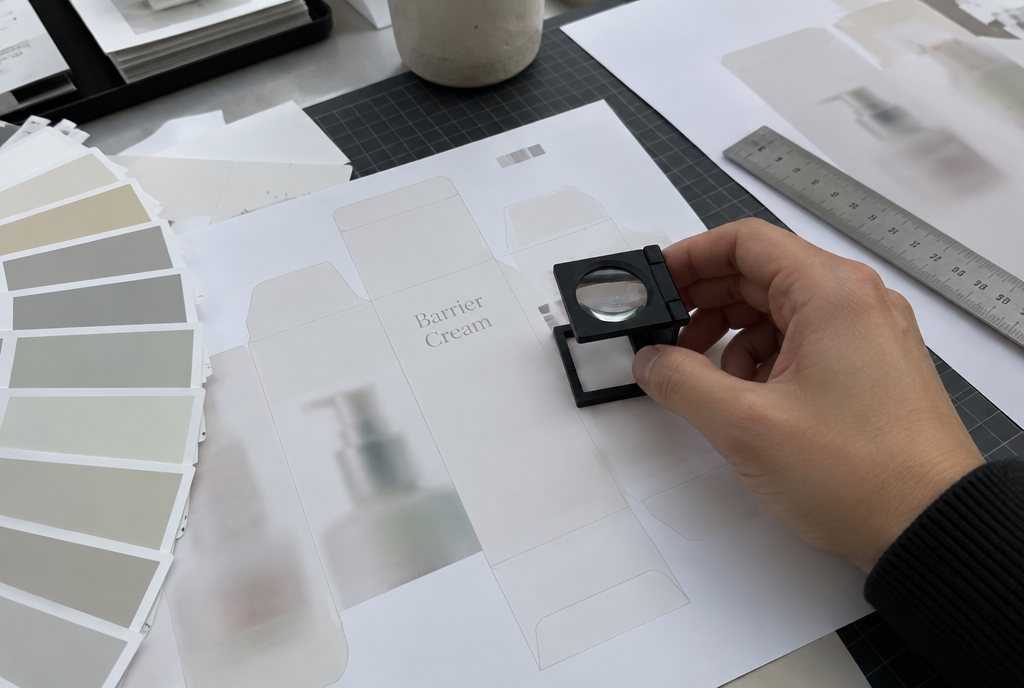
| English and Arabic label artwork | Lays out | Approves the text |
| Certificate of origin, invoice, packing list | Arranges | Gives to the broker |
| Trade license, importer code | None | Holds them |
| Montaji, MoIAT certificate, customs | Supplies documents | Applies |
KoreanOEM prepares GCC documents for Gulf projects and ships worldwide, so the importer's file is ready when the goods are.
Step 2: Keep each product a cosmetic
Dubai Municipality's cosmetic scope covers products that clean, perfume, protect, change the appearance of or keep in good condition the outside of the body, including face creams, serums, masks, mists, cleansers and sunscreens. Products that claim to prevent, treat or relieve a condition are out of scope: the guideline lists acne, eczema, rosacea and hair loss products, plus products meant for derma rollers and other microneedling tools.
Medical claims point toward the Emirates Drug Establishment, the federal medical products regulator, which covers medicated cosmetics. Keep the wording cosmetic: "hydrates dry-looking skin" or "brightens the look of dullness", never "treats acne".
Two Dubai rules matter for popular Korean formats. Exfoliators with alpha hydroxy acids need a pH of 3.5 or higher for retail sale, plus precautions on the label. Sunscreens are cosmetics in Dubai, unlike in the US, but the Municipality can ask for studies behind any number on the label, so keep the SPF report ready. Our private label sunscreen page explains how SPF rules differ by market.
Step 3: Register in Montaji and certify with MoIAT
Approval is split: Dubai Municipality registers products for Dubai, and the federal Ministry of Industry and Advanced Technology (MoIAT) certifies conformity. Both should be in place before the first shipment.
Dubai Municipality: Montaji registration
No cosmetic may be imported, advertised, sold or distributed in Dubai unless it is registered in Montaji, the Municipality's online system for consumer products. The applicant must be incorporated in Dubai, or have a warehouse there, and hold a Dubai trade license covering cosmetics. The Municipality's guidelines ask for:
- A free sale certificate from the country of origin, valid when you apply, plus an attested owner's letter if the Dubai product name differs.
- An ingredient report by weight, with CAS numbers for chemicals such as preservatives, signed and stamped by the manufacturer's R&D team.
- A test report from a certified lab against the Municipality's limits for heavy metals, preservatives and microbes.
- Label artwork, plus halal, organic or vegan certificates or claim studies when the label calls for them.
Registration is valid for 5 years, and later changes must be notified to or approved by the Municipality. Advertising, including social media, also needs approval through Montaji; free samples of registered products do not.
MoIAT: the federal conformity certificate
Under Cabinet Resolution No. 18 of 2014, cosmetics must meet the Gulf standard UAE.S GSO 1943 and cannot be sold without a conformity certificate under the Emirates Conformity Assessment Scheme (ECAS). According to MoIAT's regulation card, a notified body reviews a GSO 1943 test report (valid 3 years), a formula declaration with percentages, a free sale certificate, a distributor agreement, GMP evidence, the label, a safety report and a certificate of analysis. One certificate covers one brand, country of origin and category, up to 25 SKUs.
GSO 1943's current edition dates from May 2024; ask your notified body which edition and labs it accepts. Montaji covers Dubai only, so if you sell in other emirates, ask your importer which local approvals apply.
At KoreanOEM every client receives the full INCI list, production runs in an ISO 22716 (GMP) certified factory, and stability, challenge and patch tests are planned in. Our certifications page lists the documents by market.
Step 4: Label in English and Arabic, and decide on halal
Dubai Municipality asks for the required label items in clear English and/or Arabic, including the product name, the manufacturer or UAE agent, country of origin, INCI ingredients, production and expiry dates in non-removable print, directions, warnings and a batch number. The label must also meet GSO 1943, with no medical claims and no pictures inconsistent with local customs and values.
Saudi Arabia goes further: SFDA decides which label information must be in Arabic. If you plan to sell beyond Dubai, print English and Arabic from the first run. We adapt your logo and write compliant labels, so name every Gulf market at the brief.
Halal
Halal certification is not a general condition of registration in Dubai, but it becomes mandatory once a halal logo is on the pack, with a certificate valid when you apply. The Municipality's test annex sets lard as absent in lip products, creams and soap, and it can ask for proof of the animal or plant source of ingredients such as stearic acid and gelatin.
Under the UAE halal system, MoIAT registers the certification bodies and requires certificates to cover the finished product and its raw materials. If you want a halal claim, decide before the formula is fixed.
Step 5: Ship from Korea and clear customs
Most skincare falls under HS heading 3304. Dubai Customs charges duty at 5% of the CIF value (cost, insurance and freight). The UAE-Korea trade agreement (CEPA), in force since May 1, 2026, phases this out: according to KOTRA, Korea's trade agency, skincare under 3304.99 falls in steps to zero within 10 years. To claim the lower rate, ship with a certificate of origin that qualifies under the CEPA.
VAT of 5% applies to imports, on the customs value (insurance and freight included) plus duty. A VAT-registered importer accounts for it through the reverse charge, and registration is mandatory once taxable supplies and imports exceed AED 375,000.
At the port, imported consumer products must have at least half their shelf life left, and no less than six months. Air freight from Korea takes about 5 to 10 days and sea freight about 4 to 6 weeks, so plan production dates rather than ship old stock. Marketing and market-test samples skip registration but must be listed in Montaji, free of charge, before import. Our export guide lists the documents every shipment needs.
Selling across the Gulf: a note on Saudi SFDA
A UAE registration does not carry over. In Saudi Arabia a cosmetic cannot be imported or traded until SFDA lists it and issues a listing certificate, valid for 5 years and renewed at least 90 days before expiry. A Saudi-registered company files the listing in SFDA's GHAD system, entering every ingredient with its exact concentration. Because both countries label against GSO 1943, one formula and one bilingual pack can often serve both markets, with two separate filings.
What private label skincare for Dubai costs, and a launch checklist
| Item | Cost as of 2026 |
|---|---|
| Montaji product registration | AED 10 processing fee per product or variant |
| Consignment release, Dubai Municipality | AED 50 per container |
| Customs duty on skincare (HS 3304) | 5% of CIF; Korean origin falls to 0% within 10 years |
| VAT on imports | 5%, reverse charged if registered |
| 500 serums at KoreanOEM (US dollars) | From $1,850 ($3.70 each) |
| 1,000 sunscreens at KoreanOEM (US dollars) | From $3,100 ($3.10 each) |
Certification, lab and license costs vary. Our starting prices assume a library formula, a stock container and a one-color label; the written quote itemizes formula, packaging, decoration, tests, documents and freight. Most products start at 500 units, and at 1,000 units a serum is estimated at $2.96 each (see our private label serum options). We send a written quote within 1 business day and lab samples in about two weeks, and delivery takes about 10 weeks with a library formula and stock packaging.
- License the company for cosmetics, get the importer code and, on the mainland, register the lease with Ejari.
- Reword any treatment claims so every product stays a cosmetic.
- Collect the INCI list, ingredient report, free sale certificate and test reports.
- Approve English and Arabic labels, plus any halal certificate.
- Register in Montaji, obtain the MoIAT certificate and clear your advertising.
- Ship with a CEPA certificate of origin and at least half the shelf life left.
For a quote built around this list, send us your brief and name the UAE as your market.
Frequently asked questions
Do I need a license to sell cosmetics in Dubai?
How much does it cost to register a cosmetic product in Dubai?
Is halal certification required for cosmetics in the UAE?
What is the customs duty on cosmetics imported into the UAE?
Do cosmetic labels in the UAE have to be in Arabic?
Sources
- Dubai Municipality: Cosmetics and Personal Care guideline
- Dubai Municipality: Consumer Products Import and Re-export
- Dubai Municipality: Consumer Products E-commerce
- MoIAT: Cosmetics regulation card
- Cabinet Resolution No. 18 of 2014 (UAE cosmetics scheme), English text
- MoIAT: UAE Halal System
- GSO: GSO 1943:2024
- Emirates Drug Establishment
- UAE Government: Mainland business setup
- Dubai Customs: FAQ
- Ministry of Economy and Tourism: UAE-Korea CEPA
- KOTRA Dubai: UAE skincare market, July 2026 (Korean)
- UAE Ministry of Finance: VAT
- UAE VAT Decree-Law No. 8 of 2017
- SFDA: Cosmetic Products Law regulation
- SFDA: Cosmetic Product Notification guidance
- SFDA: Cosmetic services in the Ghad system