MoCRA registration for skincare brands: who registers, who lists, and what it costs
The factory registers, your brand lists, and FDA charges nothing for either. Here is how MoCRA splits the work when your skincare is made in Korea, and which rules are still to come.
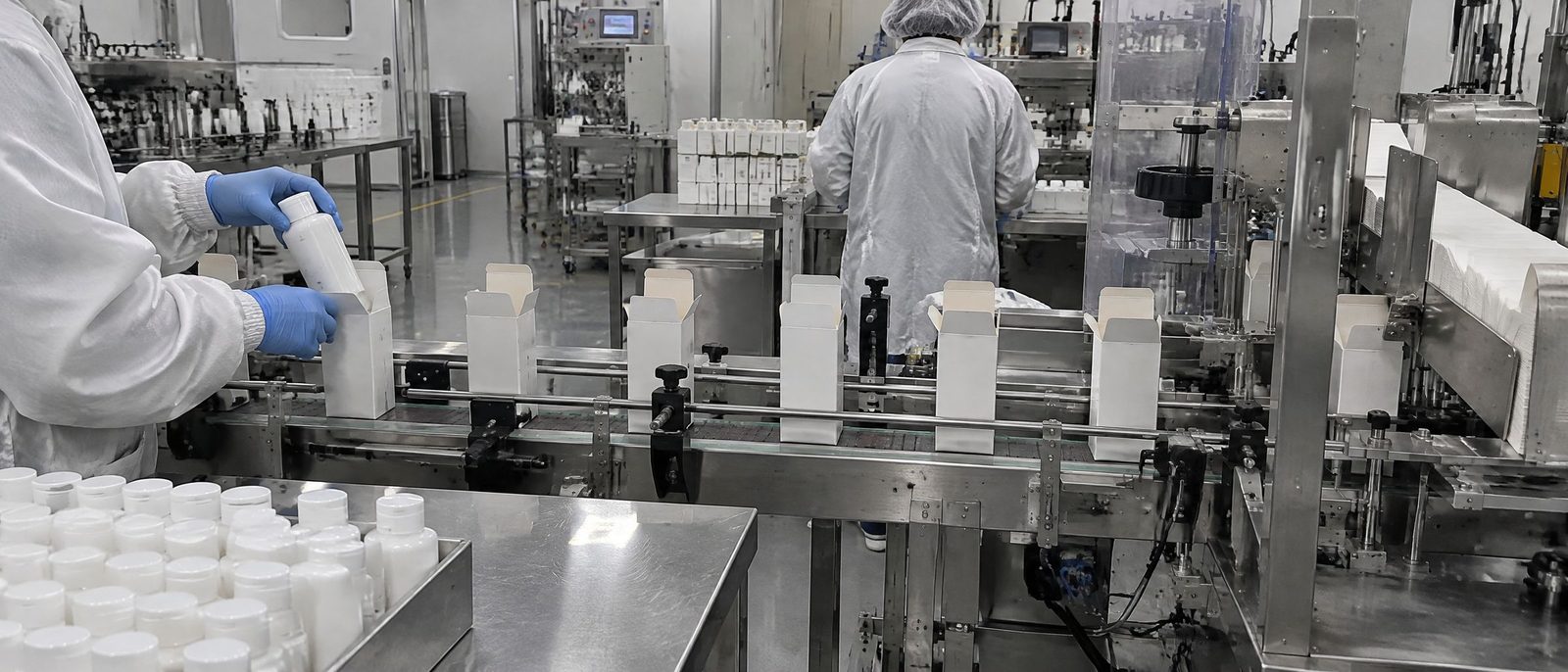
MoCRA registration is really two filings with the FDA. The facility that manufactures or processes a cosmetic registers itself, and the responsible person, the company named on the label, lists each product. Both are free and can be filed online in FDA's Cosmetics Direct portal. For skincare made in Korea, the Korean factory registers and your brand lists.
What MoCRA requires, in one minute
The Modernization of Cosmetics Regulation Act of 2022 (MoCRA) became law on December 29, 2022. FDA calls it the most significant expansion of its authority over cosmetics in more than 80 years, and it turned several voluntary habits into legal duties:
- Facility registration: factories that manufacture or process cosmetics for the US register with FDA and renew every two years.
- Product listing: the responsible person lists each product, with its ingredients, and updates the listing every year.
- Safety substantiation: the responsible person keeps records showing the product is safe as used.
- Serious adverse events: reported to FDA within 15 business days, with records kept for six years.
- Label contact: a way for consumers to report problems, printed on every label.
FDA also gained new powers: it can order a mandatory recall, see safety records during an inspection and suspend a facility's registration. None of this is an approval. In September 2026 FDA said again that a registration or listing number does not mean it has approved a facility or its products.
Who does what: the factory, your brand and your importer
MoCRA splits the work by role, not by who pays the invoice. This is the part founders most often mix up.
| Duty | Who | When |
|---|---|---|
| Facility registration | Owner or operator of the factory | Within 60 days of starting US production, renewed every 2 years |
| Product listing | Responsible person (name on the label) | Within 120 days of first sale, updated every year |
| Serious adverse event reports | Responsible person | Within 15 business days |
| Safety records | Responsible person | Before and while you sell |
For a product made in Korea, the Korean factory is the facility. A factory outside the US must name a US agent, a person or company physically present in the US, and needs an FDA Establishment Identifier (FEI) number before it registers. A contract manufacturer only needs one registration, and the law lets any brand whose products are made there submit it on the factory's behalf.
The responsible person is the manufacturer, packer or distributor whose name appears on the label. If your company name is on the box, that is you, even if you have never visited the factory. A company outside the US can be the responsible person too, as long as the label gives consumers a way to report adverse events.
Importers are a common source of confusion. FDA's guidance says an importer only registers if it manufactures or processes the product, and only lists if it is the responsible person.
What goes into the registration and the listing
The registration describes the factory: its name, address, email and phone, the US agent's contact for a foreign facility, every brand name made there, and the product categories and responsible person for each product.
A product listing describes one product, or a family of identical formulas that differ only in color, fragrance, flavor or pack size. It includes:
- the registration number of each facility where the product is made
- the responsible person's name and phone number, and the product name as printed on the label
- the product category, from FDA's list of category codes
- the full ingredient list, including fragrances, flavors and colors, named as on a US ingredient label
The first item matters most for an importing brand: you cannot finish a listing without your factory's registration number, so ask for it, and the name of its US agent, before you set a launch date. FDA assigns a product listing number but does not publish it.
Filings go through Cosmetics Direct, FDA's free online portal, or as Structured Product Labeling files sent through FDA's electronic gateway. Paper forms also exist (Form FDA 5066 for registration, 5067 for listing).
KoreanOEM sells its own skincare in the United States, so we have been through MoCRA listing ourselves. For clients we prepare the listing documents with the order: the full INCI list, the product category and the registration details of the factory, which is ISO 22716 (GMP) certified and FDA registered.
Safety records, adverse events and the label
Safety substantiation
The responsible person must ensure, and keep records showing, that there is adequate substantiation of safety. The law defines that as tests, studies, research, analyses or other evidence that qualified experts would consider enough for a reasonable certainty that the product is safe as used. FDA does not prescribe specific tests, and animal testing is not required.
For a Korean-made product, a practical safety file holds the formula and INCI list, ingredient safety data, and the stability, challenge and patch test reports. Our guide to cosmetic stability testing explains what those tests show.
Serious adverse events
A serious adverse event is one that leads to death, a life-threatening experience, hospitalization, lasting disability, a birth defect, an infection or significant disfigurement (such as serious and persistent rashes, second- or third-degree burns or significant hair loss), or that needs medical treatment to prevent one of those outcomes.
The responsible person reports it to FDA within 15 business days, with a copy of the label, and sends any new medical information received within a year, again within 15 business days. FDA takes these reports electronically or on paper MedWatch Form 3500A. Keep records of every adverse event report you receive, serious or not, for six years.
The label
Since December 29, 2024, every cosmetic label must show a US address, a US phone number or electronic contact information, such as a website, where the responsible person receives adverse event reports. Products meant only for licensed professionals, such as some esthetician products, must also say clearly that they are to be used only by licensed professionals.
The small business exemption, and what it does not cover
A responsible person or facility owner whose average US sales of cosmetics over the previous three years are under $1 million, adjusted for inflation, counts as a small business. Small businesses do not have to register facilities or list products, and will not have to follow FDA's future GMP rule. The exemption is narrower than it sounds:
- It does not cover serious adverse event reporting, safety substantiation, the label contact or recalls. Adverse event records are kept for three years instead of six.
- It never applies to products that regularly touch the mucous membrane of the eye, injected products, products for internal use, or products that change appearance for more than 24 hours and are not removed by the user. FDA's examples include eye makeup remover, liquid eyeliner and lash glue, plus some nail polishes, hair dyes and tattoo inks. Facial cleansers, moisturizers and serums generally do not count.
- It is judged separately for each company. Your brand may be exempt while your Korean factory still has to register.
FDA does not generally ask for proof of small business status and does not issue exemption certificates. Exempt companies may still register and list voluntarily.
Fees: what FDA charges and what costs money
FDA charges no fee to register a facility or list a product. Its registration and listing guidance answers the question directly: there is no fee for either submission.
FDA does not issue certificates either. In September 2026 it said it provides no certificates, verification letters or exemption letters for cosmetic registration or listing, even though e-commerce platforms such as TikTok Shop may ask sellers for proof of registration. A paid "FDA certificate" is not an FDA document.
The real costs sit elsewhere: a US agent service for a foreign factory, the tests behind your safety file, label design and your own time. Prices for agents and consultants vary widely, so get written quotes and check exactly which filings each one includes.
Key dates, and the rules still pending
| Date | What happened |
|---|---|
| Dec 29, 2022 | MoCRA signed into law |
| Dec 29, 2023 | Adverse event reporting enforceable; legal deadline to register existing facilities and list existing products |
| July 1, 2024 | FDA starts enforcing registration and listing |
| Dec 29, 2024 | Adverse event contact required on labels |
| Dec 29, 2025 | FDA publishes its report on PFAS in cosmetics |
| Feb 2026 | FDA updates Cosmetics Direct for the first two-year registration renewals |
As of September 2026, three pieces are still missing:
- GMP rule. MoCRA told FDA to propose cosmetic GMP rules by December 29, 2024 and finalize them by December 29, 2025. No proposal had been published as of September 2026. The law says the rules should match national and international standards where practicable, and ISO 22716 is the international standard for cosmetic GMP.
- Fragrance allergen labeling. Allergens in fragrance will have to be named on the label once FDA defines them by regulation. The proposal was due by June 29, 2024 and had not been published as of September 2026.
- Talc testing. FDA proposed asbestos testing methods for talc products in December 2024 and withdrew the proposal in November 2025.
One more boundary: products that are also drugs, such as SPF sunscreens, follow FDA's drug rules instead of MoCRA's registration and listing. We explain what that means in why Korean sunscreen is hard to sell in the US.
A MoCRA checklist for a brand importing from Korea
- Get your factory's FDA registration number (its FEI) and the name of its US agent.
- Confirm your company is the responsible person and that its name and address are on the label.
- Add a US address, US phone number or website contact for adverse event reports.
- Build the safety file: INCI list, ingredient data, stability, challenge and patch test reports.
- List each product within 120 days of first sale, or document why your company qualifies for the small business exemption.
- Set up an inbox and a routine for adverse events, so serious ones reach FDA within 15 business days.
- Put the yearly listing update and the factory's two-year renewal in your calendar.
- Check that nothing in your range counts as a drug in the US, for example because of an SPF or acne claim.
Our export guide covers labels and shipping papers for the US and other markets. When you are ready, ask KoreanOEM for a quote and we will include the MoCRA listing documents for your products.
Frequently asked questions
Does FDA charge a fee for MoCRA registration?
Who registers with FDA when my skincare is made in Korea?
Does FDA issue a MoCRA registration certificate?
Is a small skincare brand exempt from MoCRA?
Do I print the product listing number on my label?
Sources
- FDA: Modernization of Cosmetics Regulation Act of 2022 (MoCRA)
- FDA: Registration and Listing of Cosmetic Product Facilities and Products
- FDA: Guidance for Industry, Registration and Listing of Cosmetic Product Facilities and Products (December 2024)
- FDA: Cosmetics Direct
- FDA: FDA Clarifies It Does Not Provide Certificates for Cosmetic Product Facility Registration (September 2026)
- FDA: How to Report a Cosmetic Product Related Complaint
- US Code: 21 U.S.C. 364a, Adverse events
- US Code: 21 U.S.C. 364c, Registration and product listing
- US Code: 21 U.S.C. 364e, Labeling
- US Code: 21 U.S.C. 364h, Small businesses
- Federal Register: Withdrawal of the proposed talc asbestos testing rule (November 2025)