Why Korean sunscreen is banned in the US, and what it takes to sell one legally
No US law names Korean sunscreen. Sunscreen is a drug in the US, and only filters on FDA's list may be used. Here is what that means for shoppers, sellers and brands in 2026.
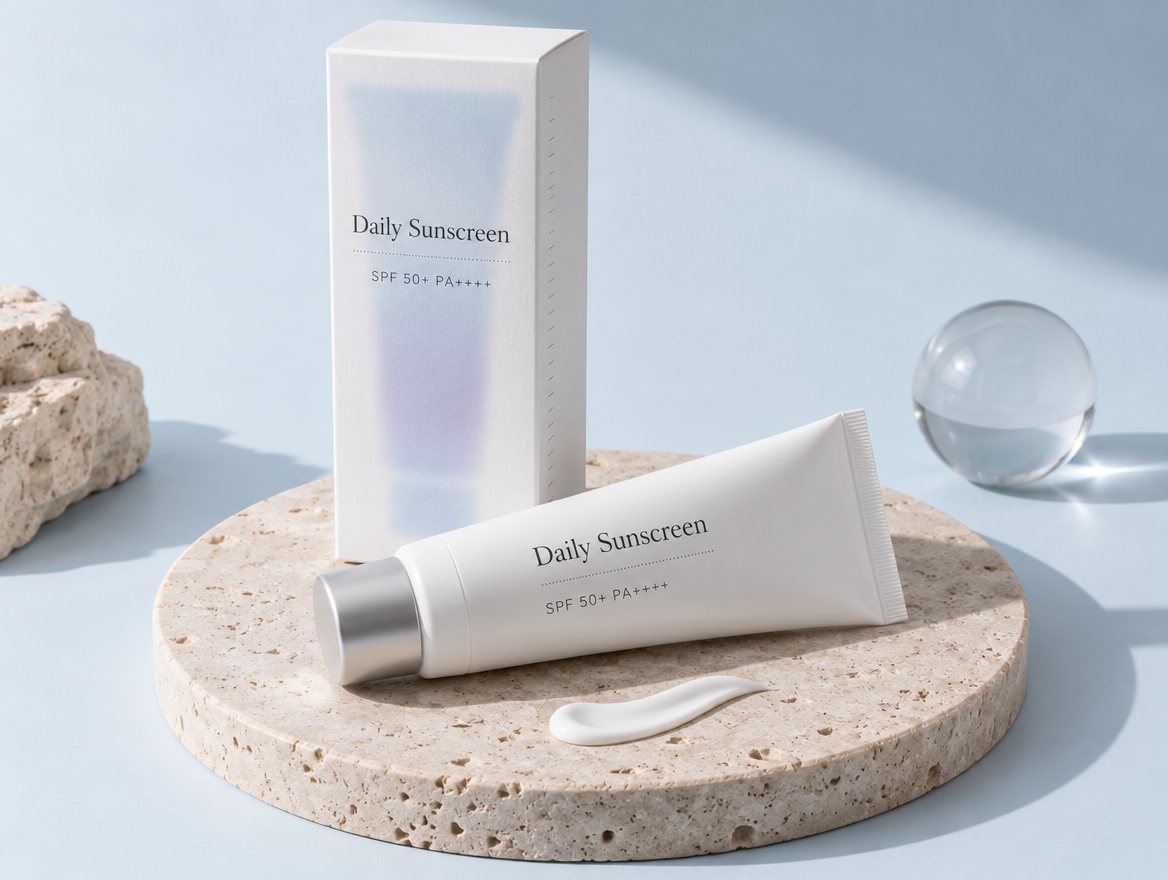
Korean sunscreen is not banned in the US by name. In the US, sunscreen is an over-the-counter drug, and it may only use the UV filters listed in FDA's sunscreen monograph. Korean formulas can use newer filters that are not on that list, and a sunscreen that contains one is an unapproved drug in the US.
Sunscreen is a drug in the US and a cosmetic in Korea and the EU
In the EU a sunscreen is a cosmetic, and in Korea it is a functional cosmetic, a special class of cosmetic whose SPF, water resistance and UVA data are reviewed by the Ministry of Food and Drug Safety (MFDS). In the US it is an over-the-counter (OTC) drug. It can be sold without an approved drug application only if it meets FDA's sunscreen monograph, M020: listed active ingredients at set strengths, set tests and a standard Drug Facts label.
That is also why the 2022 cosmetics law does not help here. MoCRA registration covers cosmetics; products that are also drugs follow the drug rules instead.
| Market | Sunscreen is | UV filter list |
|---|---|---|
| United States | OTC drug (FDA monograph M020) | 17 listed, 2 being removed |
| South Korea | Functional cosmetic (MFDS) | Includes newer filters |
| European Union | Cosmetic (Regulation 1223/2009) | Annex VI, includes newer filters |
| Australia | Therapeutic good if sun protection is its main purpose | TGA list, includes newer filters |
The US filter list, and the Korean favorites missing from it
FDA's monograph lists 17 sunscreen active ingredients: avobenzone, bemotrizinol, cinoxate, dioxybenzone, ensulizole, homosalate, meradimate, octinoxate, octisalate, octocrylene, oxybenzone, padimate O, sulisobenzone, titanium dioxide and zinc oxide, plus PABA and trolamine salicylate, which FDA decided in September 2026 to remove. Bemotrizinol is the newest name, added in 2026.
Korea's permitted list, like the EU's Annex VI, also includes filters the US does not list, for example:
- bisoctrizole (INCI name: methylene bis-benzotriazolyl tetramethylbutylphenol)
- diethylamino hydroxybenzoyl hexyl benzoate
- ethylhexyl triazone
- diethylhexyl butamido triazone
- drometrizole trisiloxane
- polysilicone-15
A sunscreen with any one of these as an active ingredient cannot be sold under the US monograph, even if every other filter in it is on the list. One naming trap: bemotrizinol and bis-ethylhexyloxyphenol methoxyphenyl triazine are the same filter. FDA uses the first name, while EU ingredient lists, and the English lists on Korean products, use the second, the INCI name.
What changed in 2026: bemotrizinol, with strings attached
In June 2026 FDA added bemotrizinol to the monograph, the first new sunscreen active ingredient since the late 1990s. The details matter for a brand:
- Up to 6 percent in the US, where the EU and Australia allow up to 10 percent.
- For adults and children 6 months and older.
- Allowed as an oil, lotion, cream, gel, butter, paste, ointment, stick or spray, as long as no propellant touches the formula.
- Combinable with other listed filters in the ways the monograph allows, never with PABA or trolamine salicylate.
- The order's effective date is August 9, 2026. For the following 18 months, the law reserves marketing under it for DSM Nutritional Products, the company that asked FDA for the change, and its licensees.
So the door is open, but during the exclusivity window you need to confirm with your filter supplier and a regulatory adviser that a product made with bemotrizinol can be sold under the order.
Two other moves are worth knowing. In September 2026 FDA finalized the removal of PABA and trolamine salicylate because their risks outweigh their benefits, and under the CARES Act that kind of order takes effect no sooner than a year after it is issued. FDA's 2021 proposal for the rest of the monograph is still open as of 2026: it asks for more safety data on 12 filters, including avobenzone, homosalate and octocrylene, would require broad spectrum protection from SPF 15 up, and would cap the labeled SPF at 60+. FDA says asking for data does not mean those filters are unsafe.
Personal imports and marketplaces: what actually happens
FDA's personal importation page is blunt: in most circumstances it is illegal for individuals to import drugs that are not approved in the US, and that includes drugs approved in another country. FDA staff may use discretion for a personal-use product that is not for a serious condition and carries no known significant health risk, but that is discretion, not a right. Shipments that look commercial, or products on an import alert, can be refused.
For sellers the picture is stricter. FDA's import alert for unapproved new drugs lets its staff detain listed products without physical examination, and the list includes sun creams from Korean companies. A listing on a US marketplace does not make a product legal: the drug rules apply to whoever sells it.
That is the short answer to why Korean sunscreens "disappeared". Korea JoongAng Daily reported in April 2025 that well-known Korean brands had pulled sunscreens from US sale, one of them citing the long-term risk of shipping unapproved OTC drugs to the US, and that some had launched US-only versions built on FDA-listed filters.
Why Korean sunscreens feel different
Much of the difference comes from the filters. A 2025 review in Photodermatology, Photoimmunology and Photomedicine found that filters used abroad, such as bemotrizinol, bisoctrizole and drometrizole trisiloxane, give broader and more stable UV protection, and described sunscreens from the EU and Asia as more aesthetically pleasing. It also notes that US mineral sunscreens can leave a visible white cast, especially on darker skin.
The labels differ too. Korea grades UVA protection from PA+ to PA++++, where PA++++ means a UVA protection factor of 16 or more in the MFDS test. A US label has no UVA grade: it may say "Broad Spectrum" only if the product passes FDA's test, which requires a critical wavelength of 370 nm or more.
Is Korean sunscreen better? It has more building blocks. A formulator working from the longer Korean or EU list has more room on texture and UVA protection, so matching a Korean feel with US filters takes more development work. For the other reasons Korean formulas stand out, see why Korean skincare is so good.
Why Australia is different
Australia permits many filters the US does not, including bemotrizinol, bisoctrizole and diethylamino hydroxybenzoyl hexyl benzoate at up to 10 percent. The barrier there is the product route. A primary sunscreen, or a secondary one such as a moisturizer with an SPF over 15, is a therapeutic good. It must be listed in the Australian Register of Therapeutic Goods (ARTG) by a sponsor who certifies that it meets Australian requirements, and it generally carries an AUST L number. It must be made by a manufacturer that TGA has licensed or, for a factory abroad, given a GMP clearance, and it must be tested and labeled to the Australian standard AS/NZS 2604:2021.
So a Korean sunscreen that no sponsor has listed in the ARTG cannot legally be supplied there, even if every filter in it is permitted. Cosmetic sunscreens, such as moisturizers with SPF 4 to 15 in packs of 300 mL or less that make no water resistance or skin cancer claims, sit outside the ARTG but must still meet the standard's testing and labeling rules. Our guide to starting a skincare brand in Australia covers the rest.
How to make a Korean-style sunscreen for the US
It can be done, but it is a drug project, not a cosmetic one. This is what it takes:
- US filters only, each within its limit and in a combination the monograph allows, for example zinc oxide and titanium dioxide for a mineral formula, or avobenzone with homosalate, octisalate and octocrylene for a chemical one. Some pairings are not allowed at all: avobenzone cannot be combined with zinc oxide or titanium dioxide.
- Tests by the monograph's methods: SPF, the broad spectrum test if you want to say "Broad Spectrum", and 40 or 80 minute water resistance testing for a water resistance claim.
- A Drug Facts label in FDA's OTC format, with "Broad Spectrum SPF" and the tested number on the front. Products under SPF 15, or not broad spectrum, must carry FDA's Skin Cancer/Skin Aging Alert.
- A drug-registered factory. The factory registers with FDA as a drug establishment, names a US agent, lists the product (which gets a National Drug Code) and works to drug GMP (21 CFR parts 210 and 211).
- FDA's facility fee. Owners of OTC monograph drug factories pay a yearly fee: $47,891 for fiscal year 2027 (October 2026 to September 2027), or $31,927 for a qualifying contract manufacturing facility.
That is why KoreanOEM quotes US sunscreen case by case: the filter set, the tests and the drug paperwork change the cost and the timeline. For markets where sunscreen is a cosmetic, such as the EU and UK, a Korean-style private label sunscreen starts from $3.10 per unit at 1,000 units, with SPF testing quoted as its own line. If you want a version for the US as well, tell us early and ask for a quote that plans both.
Frequently asked questions
Is Korean sunscreen illegal in the US?
Is bemotrizinol allowed in US sunscreen now?
Can I bring Korean sunscreen home from a trip to Korea?
Why is Korean sunscreen banned in Australia?
Why is Korean sunscreen better?
Sources
- FDA: Questions and Answers, FDA's regulatory actions on over-the-counter sunscreen (updated September 2026)
- FDA: FDA Expands Sunscreen Options for the First Time in 20 Years (June 2026)
- FDA OTC Monographs@FDA: Final Administrative Order OTC000039, bemotrizinol (PDF)
- Federal Register: Notice of final order OTC000039 (June 10, 2026)
- Federal Register: Notice of final order OTC000008-1, PABA and trolamine salicylate (September 11, 2026)
- FDA: Personal Importation
- FDA: Import Alert 66-41, unapproved new drugs promoted in the US
- eCFR: 21 CFR 201.66, format and content of OTC drug labeling
- eCFR: 21 CFR part 207, drug establishment registration and drug listing
- eCFR: 21 CFR part 211, current good manufacturing practice for finished pharmaceuticals
- Federal Register: OTC Monograph Drug User Fee Rates for Fiscal Year 2027
- MFDS: Functional cosmetics approval process
- Korea Law Information Center: Regulation on the Review of Functional Cosmetics, Annex 3 on UV protection testing (Korean)
- Korea Law Information Center: Regulation on Safety Standards of Cosmetics, permitted UV filters (Korean)
- EUR-Lex: Regulation (EC) No 1223/2009, Annex VI (UV filters)
- TGA: Sunscreen regulation in Australia
- TGA: Understanding the regulation of therapeutic sunscreens
- PubMed Central: Turner and Torgerson, Modernizing U.S. Sunscreen Regulations (2025)
- Korea JoongAng Daily: Americans are hoarding Korean sunscreen (news report, April 2025)