Why Korean skincare is so good, and when it is not better
A manufacturer's honest answer: what Korea does well, why prices can be low, where the science is thinner than the hype, and how brands abroad make their own.
Korean skincare is good mainly because of how it is made. Nearly 28,000 registered cosmetics sellers and more than 4,000 manufacturers compete in one small country, so new formulas reach shelves in months, textures are light enough to layer and prices stay low. Popular ingredients help too. But whether a product is better depends on its formula, not its flag.
A dense, fast manufacturing ecosystem
Korea's regulator, the Ministry of Food and Drug Safety (MFDS), counted 27,932 registered cosmetics sellers and 4,439 manufacturers in 2024. Sellers do not need a factory: the MFDS describes them as businesses that can have products made under contract with nothing more than an idea. Large ODM makers such as Cosmax and Kolmar Korea, and thousands of smaller factories, develop and fill products for them.
That density shortens everything. Raw material suppliers, packaging makers and filling lines work close together, so a brief can become a finished product in weeks rather than quarters. At KoreanOEM, a library formula in stock packaging takes about 10 weeks from brief to delivery, and a custom formula 12 to 16 weeks. Fast cycles mean more launches, more feedback from demanding shoppers and quicker fixes. You can see how our lab develops formulas.
The results show in trade data. According to the MFDS, Korea exported USD 11.4 billion of cosmetics in 2025, second only to France, and the United States was its largest market at USD 2.2 billion. In 2024, Korean products already made up 22.2 percent of US cosmetics imports, ahead of France at 16.3 percent.
Why Korean skincare is so popular
Popularity follows value. Korean brands put gentle, pleasant textures and new ingredients into products at mid-market prices, then sell them on social media, where a sheet mask or a glassy serum is easy to show. Routines are easy to copy, formats such as essences, ampoules and sleeping masks give people something new to try, and a steady stream of launches keeps the category in the feed.
Lightweight, layered textures
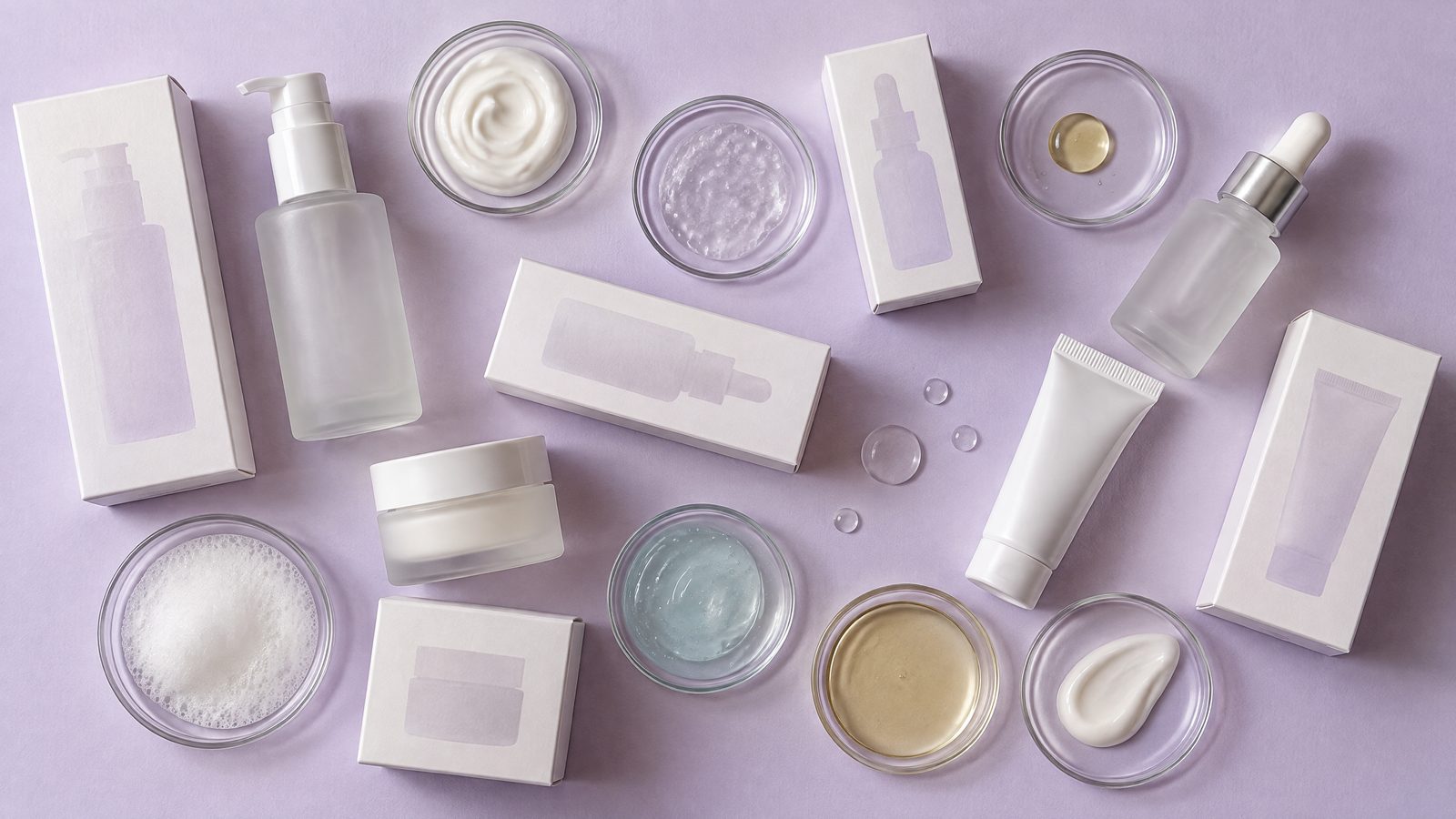
Korean routines use several thin layers instead of one heavy cream: a watery toner, an essence, a serum, then a gel cream or light cream. Korean formulators are practiced at textures that sink in fast and do not feel greasy, because that is what their home market buys through humid summers and cold, dry winters.
For a brand abroad this is a practical advantage. A watery essence or a light gel cream has to feel elegant and stay stable at the same time, which takes experience, and Korean factories make these textures every day.
Ingredient trends and what the evidence says
Korean labs are quick to adopt ingredients with a story. The evidence behind them varies, so it helps to know where it is strong and where it is early.
| Ingredient | Why brands use it | What the research says |
|---|---|---|
| Centella asiatica | Calming, comfort after treatments | Well studied; much of the work is on wound care |
| Fermented extracts | More compatible extracts | Fermentation breaks large molecules into smaller ones; results vary by product |
| Snail secretion filtrate | Hydration and slip | Mostly lab and small clinical studies so far |
| Rice extracts and ferments | Softness, a brighter look | A 2022 review describes moisturizing and antioxidant effects |
| PDRN | Salmon DNA fragments with clinic appeal | Began as a registered drug, mostly injected; cosmetic research is newer |
Two things matter more than the ingredient name: how much of it is in the formula, and whether the finished product was tested. A centella cream with a trace of extract is a story; one with a meaningful dose in a stable, tested base is a product. If PDRN interests you, read our guide to a private label PDRN serum.
Sunscreen filters that differ from the US
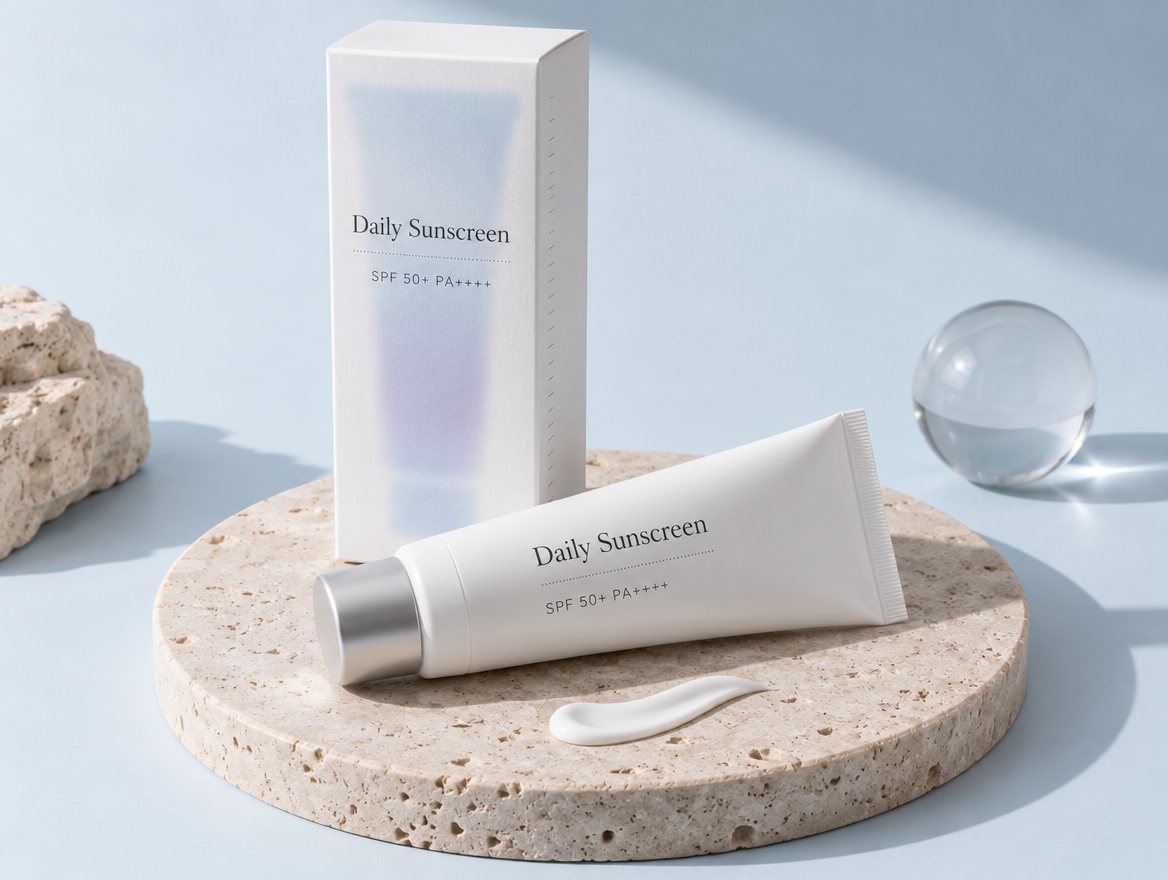
Korean sunscreens are known for light, invisible finishes, and part of the reason is regulatory. In Korea, sunscreen is a functional cosmetic: the MFDS reviews SPF and PA data before the claims can be made. In the US, sunscreen is an over-the-counter drug, and the list of permitted UV filters did not grow from the late 1990s until June 2026, when the FDA added bemotrizinol, a filter marketed in Europe and many other countries for years.
So a Korean sunscreen formula often cannot go on sale in the US as it is. We explain the details in why Korean sunscreen is not sold in the US.
Why Korean skincare can be so cheap
- Competition: with nearly 28,000 registered sellers, a brand that overcharges is quickly undercut.
- Shared development: ODM factories build formula libraries and reuse proven bases across clients, so each brand pays less for development.
- Nearby supply: stock bottles, jars and tubes come from local suppliers without tooling costs.
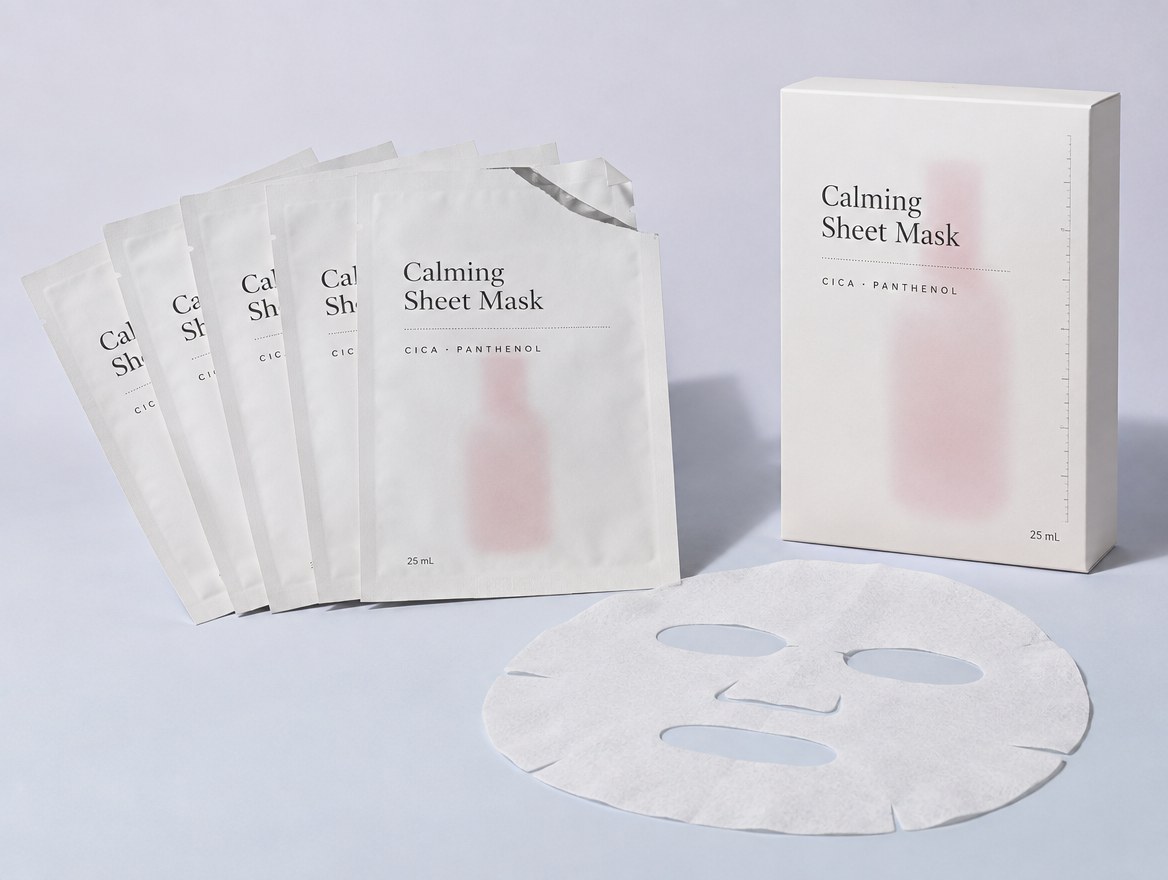
- Scale in popular formats: sheet masks run in large volumes; at KoreanOEM a sheet mask starts from $0.55 at 1,000 units.
Prices abroad are higher than in Seoul because shipping, duties and distributor and retailer margins stack on top; our guide on how to import Korean skincare explains that side. A low price at home does not mean cheap ingredients. It usually means an efficient supply chain.
Is Korean skincare better than American skincare?
It depends on the product. Korea is strong at textures, gentle daily products, sheet masks, fast launches and value. American and European brands have their own strengths, and US rules put sunscreens and acne treatments through drug requirements. Good and bad products exist in every country, and Made in Korea on a label is not a quality grade on its own.
Speed has a downside too. When an ingredient trends, some launches carry it at a token level, and fast cycles mean products are reformulated or discontinued sooner than shoppers expect.
Korea's system does add a layer of discipline for certain claims. Products that claim whitening, wrinkle improvement, UV protection or relief of acne, hair loss or atopic dryness must pass an MFDS review or be reported as functional cosmetics before making those claims. The same claims can make a product a drug in the US, so Korean products sold there often change their wording.
To judge any product, wherever it is made, check four things: the full ingredient list and where the key ingredient sits in it, packaging that protects sensitive actives, evidence of stability and preservative testing, and claims that describe how skin looks and feels rather than promising medical results.
How brands abroad make their own Korean skincare
The system that serves Korean brands is open to brands elsewhere. A private label brief starts with your products and market; the manufacturer proposes library formulas or develops a custom one, you approve lab samples, and production follows with the labels and documents your market needs. KoreanOEM makes 30 product types in an ISO 22716 (GMP) certified, FDA registered factory in Korea, sends a written quote within one business day and ships lab samples in about two weeks. Browse the product range or ask for a quote when your brief is ready.
Frequently asked questions
Why is Korean skincare so popular?
Is Korean skincare better than American skincare?
Why is Korean skincare so cheap?
Is Korean skincare safe?
Why are Korean sunscreens different from American ones?
Sources
- MFDS: Functional Cosmetics
- MFDS press release, 27 May 2025: 2024 cosmetics production and exports (Korean, PDF)
- Korea.net: Cosmetics surplus breaks USD 10B, exports ranked 2nd worldwide
- FDA: FDA Expands Sunscreen Options for the First Time in 20 Years
- FDA: Cosmetics Importers (cosmetic and drug definitions abroad)
- Bylka et al., Centella asiatica in cosmetology (2013)
- Majchrzak et al., Biological and cosmetical importance of fermented raw materials (2022)
- Singh et al., Snail extract for skin: a review of uses, projections, and limitations (2024)
- Zamil et al., Dermatological uses of rice products: trend or true? (2022)
- Squadrito et al., Pharmacological activity and clinical use of PDRN (2017)
- Nguyen et al., Recent advances on polydeoxyribonucleotide extraction and its application in cosmeceuticals (2024)