How to start a skincare line in Canada with products made in Korea
Health Canada's rules, the bilingual label, customs and duty, and a realistic first budget, in the order you will meet them when your skincare is made in Korea.
To start a skincare line in Canada, register a business with an import account, confirm each product is a cosmetic rather than a drug, check the formula against Health Canada's Hotlist, label it in English and French, and file a Cosmetic Notification Form within 10 days of your first sale. Korean-made skincare can enter duty free.
This guide follows the order in which a founder meets each step when the products are made in Korea and shipped to Canada. It describes the rules as of 2026 and links to the official pages at the end, so you can check anything that changes.
Step 1: Set up the business and your import account
Health Canada does not approve cosmetics before they go on sale, so the first step is an ordinary business. Sole proprietors and partnerships usually register with their province. Federal incorporation costs C$200 online as of 2026, and a federal corporation must also register in each province where it does business. Either way you receive a nine-digit business number (BN) from the Canada Revenue Agency.
To import commercial goods, the Canada Border Services Agency (CBSA) requires an account in its CARM Client Portal, your BN, and an import-export (RM) program account, which you now open through CARM. You can prepare the release and accounting documents yourself or hire a licensed customs broker. If you want goods released before you pay duties and taxes, you must enroll in Release Prior to Payment and post financial security.
For sales tax, you must register for GST/HST once taxable sales pass C$30,000 in a single calendar quarter or over four consecutive quarters. Registering earlier lets an importer claim back the GST paid at the border as an input tax credit.
Step 2: Make sure each product is a cosmetic
Health Canada classifies a personal care product as a cosmetic, a drug or a natural health product (NHP) based on what is in it and how it is represented for sale. Therapeutic claims are only allowed on drugs and NHPs.
- Cosmetic: cleanses, moisturizes or improves the look of skin. "Hydrates dry-looking skin" is cosmetic wording.
- Not a cosmetic: Health Canada lists acne treatments, antidandruff shampoos, skin whiteners or lighteners, and anything with an "SPF" or "sunblock" claim, even makeup. These need a Drug Identification Number (DIN) or a Natural Product Number (NPN) before sale, and the importer needs a drug establishment license or an NHP site license.
Two Korean habits often cause trouble here: "whitening" claims and SPF in everyday creams. Reword a brightening serum as "brightens the look of dull skin", and treat any SPF product as its own licensing project. Our private label sunscreen page explains why sunscreen rules differ so much by market.
The rules are the same for private label (your own or a customized formula) and white label (a ready-made formula under your name). If you are still choosing, this comparison covers cost and control.
Step 3: Check the formula against the Hotlist
The Cosmetic Ingredient Hotlist is Health Canada's list of prohibited and restricted cosmetic ingredients. Prohibited ingredients should not be present in cosmetics sold in Canada. Restricted ones are allowed only under the listed conditions, such as a maximum concentration or a warning, and those warnings must appear in English and French. The last published changes came in August 2025 and a consultation on further updates closed in February 2026, so check the live list before you finalize a formula.
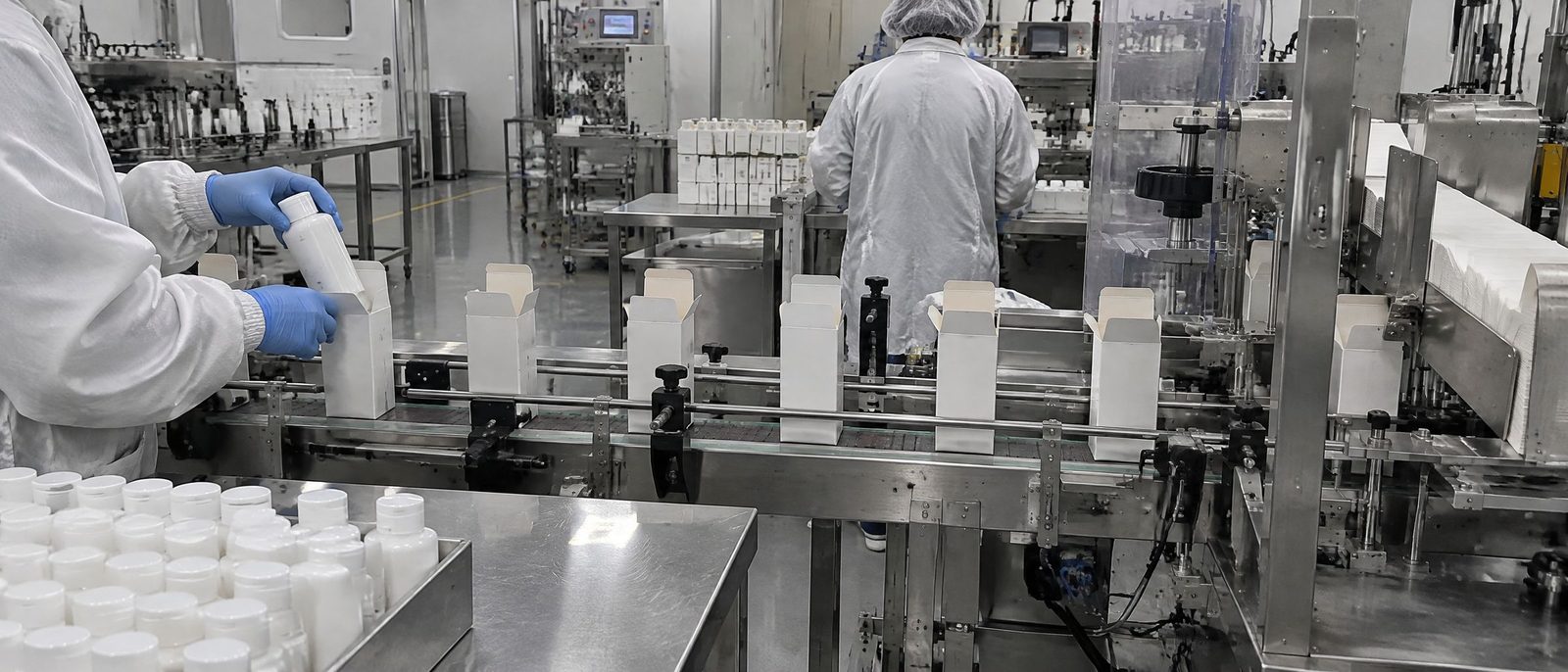
The Hotlist is not exhaustive: the Food and Drugs Act still bans selling a cosmetic that may injure the user. Ask your manufacturer for the full INCI list with concentrations, because the notification asks for them anyway. At KoreanOEM every client receives the full INCI list, a custom formula stays the client's, and production runs in an ISO 22716 (GMP) certified factory (see our certifications).
Step 4: Label in English and French
Labels follow the Cosmetic Regulations and the Consumer Packaging and Labelling Act. Everything they require must be in English and French, with two exceptions: INCI ingredient names, and the dealer's name and address, which may be in either language.
| Label item | Language | Notes |
|---|---|---|
| Product identity (for example moisturizer / hydratant) | English and French | On the main display panel |
| Net quantity | English and French | Metric; symbols such as mL and g count as bilingual |
| Ingredient list | INCI names | On the outer label, descending order by weight; 1% or less and colorants in any order after the rest |
| Warnings and directions | English and French | Required where the product presents an avoidable hazard |
| Dealer name and address | English or French | For imports: "Imported by / Importé par", or the country of origin next to it |
Fragrance allergens changed in 2026. They must be named in the ingredient list, outside "parfum", when present above 0.001% in leave-on products or 0.01% in rinse-off products. Canada follows the EU list: 24 allergens from April 12, 2026, then an expanded list for new products from August 1, 2026. A product you launch now follows the expanded list; products already on sale before that date have until August 1, 2028.
The container itself needs a way to reach the company, and a phone number, email or website is enough. If a container is too small for a legible ingredient list, you can attach a tag, tape or card, or print a bilingual statement pointing to a website (a QR code is fine) that shows the list.
Quebec goes further under the Charter of the French language. All text on the product and its packaging must be in French, and no other language may be more prominent. From June 1, 2025, descriptive words inside an English trademark, such as an ingredient or a scent, must also appear in French, although the product name and company name can stay in English.
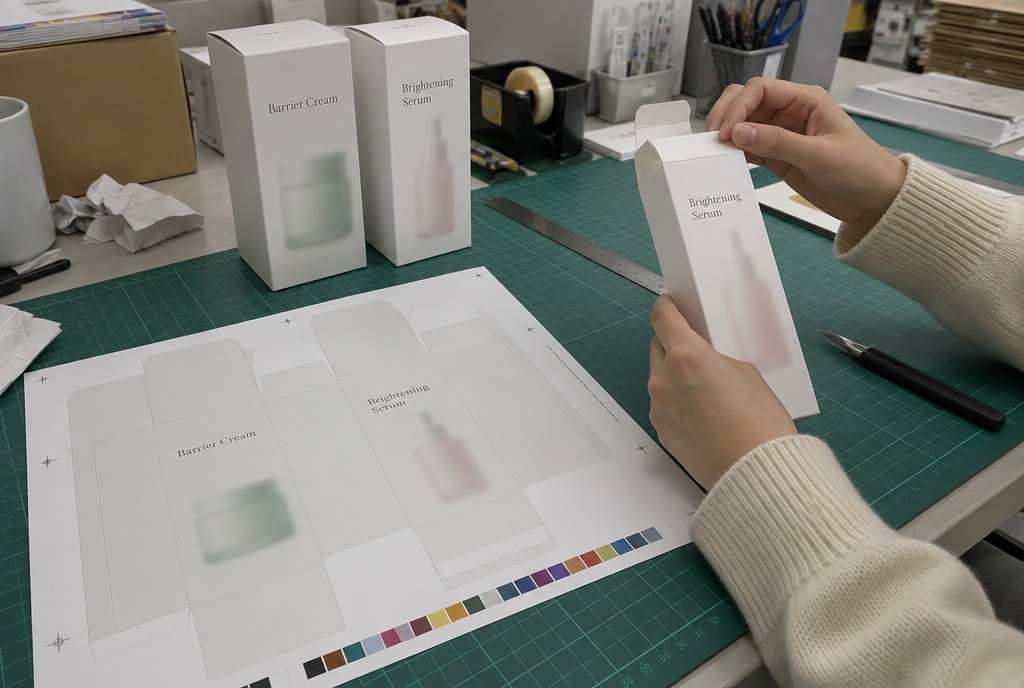
KoreanOEM adapts your logo and writes compliant labels, so say at the brief that the pack is for Canada and the first proof will carry both languages.
Step 5: File the Cosmetic Notification Form
Every manufacturer and importer must notify Health Canada within 10 days after first selling a cosmetic in Canada, using the online Cosmetic Notification Form (CNF). There is no fee. In these rules the "manufacturer" is the company in Canada that sells under its own name or trademark, so a Canadian brand importing its own stock is usually both, and the form also records the Korean factory that actually makes the product. A consultant can fill in the form, but the manufacturer and importer named must be in Canada.
The form asks for the product name, its function and form, whether it is leave-on or rinse-off, the contact on the label, the Canadian manufacturer or importer, and every ingredient by INCI name with its exact concentration or a range. You may enter an estimated first-sale date, so you can file before the goods ship.
A CNF is not an approval. Health Canada screens it against the Hotlist and can ask in writing for evidence that the product is safe; a foreign manufacturer may supply that evidence for the importer. A revised notification is due within 10 days after any information becomes inaccurate, for example a formula change, a new name or address, or a product you stop selling. Without a complete notification the product cannot be sold, and it can be denied entry at the border.
Step 6: Import from Korea through the CBSA
In the 2026 Customs Tariff, most skin care preparations fall under tariff item 3304.99.90, with statistical suffix 20 for face, hand and body creams and lotions. The general most-favored-nation (MFN) rate is 6.5%. Goods of Korean origin under the Canada-Korea Free Trade Agreement (tariff treatment KRT) enter free.
To claim that rate, you must hold Form BSF760, the Canada-Korea certificate of origin completed by the exporter, when you account for the goods, and the shipment must meet the direct shipment rules. Without the certificate, the 6.5% rate applies.
GST of 5% is charged at the border on the Canadian dollar value of the goods, including duty, and a GST/HST registrant can usually claim it back. Air freight from Korea takes about 5 to 10 days and sea freight about 4 to 6 weeks. Our export guide lists the full document pack, and our article on importing Korean skincare compares reselling existing brands with launching your own.
What a first launch costs, and your checklist
| Item | Cost as of 2026 |
|---|---|
| Federal incorporation, online | C$200 (provincial registration extra) |
| Cosmetic Notification Form | No fee |
| Duty on Korean-origin skincare (3304.99.90) | Free with Form BSF760, 6.5% otherwise |
| GST at the border | 5%, usually recoverable if registered |
| Security for release before payment | Written security agreement of at least C$5,000 per RM account |
| 500 serums at KoreanOEM (US dollars) | From $1,850 ($3.70 each) |
| 500 creams at KoreanOEM (US dollars) | From $1,550 ($3.10 each) |
Starting prices assume a library formula, a stock container and a one-color label; the written quote itemizes formula, packaging, decoration, tests, documents and freight. At 1,000 units a serum is estimated at $2.96 each.
- Register the business and get a BN.
- Open the CARM Client Portal account and RM account, and decide on a customs broker.
- Confirm every product is a cosmetic, and reword any treatment, whitening or SPF claims.
- Get the full INCI list with concentrations and check it against the Hotlist.
- Check fragrance allergens against the expanded list.
- Approve bilingual label proofs, including the importer line (and French trademark terms for Quebec).
- Approve lab samples, then the pre-production sample.
- Confirm the tariff item and get Form BSF760 from the exporter.
- File the Cosmetic Notification Form no later than 10 days after the first sale.
- Update the CNF within 10 days whenever something changes.
If you want a quote built around this list, send us your brief and name Canada as your market.
Frequently asked questions
Do I need a license to sell skincare in Canada?
How much does the Cosmetic Notification Form cost?
Do cosmetic labels in Canada have to be in French?
Is sunscreen a cosmetic in Canada?
What duty do I pay on skincare imported from Korea?
Sources
- Justice Laws: Cosmetic Regulations (C.R.C., c. 869)
- Health Canada: Notification of Cosmetics
- Health Canada: Guide for Cosmetic Notifications
- Health Canada: Products not considered to be cosmetics
- Health Canada: Cosmetic Ingredient Hotlist
- Health Canada: Industry Guide for the labelling of cosmetics
- Health Canada: Sunscreens
- Office québécois de la langue française: Marque de commerce sur les produits
- CBSA: Guide to importing commercial goods into Canada
- CBSA: Memorandum D11-4-2, Proof of origin of imported goods
- CBSA: Customs Tariff 2026, Chapter 33
- CRA: GST/HST on imports and exports
- Corporations Canada: Services, fees and processing times