How to import skincare from Korea, step by step
From the documents we prepare in Korea to customs in your country: HS codes, the Certificate of Origin, FOB Incheon, sea or air, LCL or FCL, and what your customs broker and importer handle.
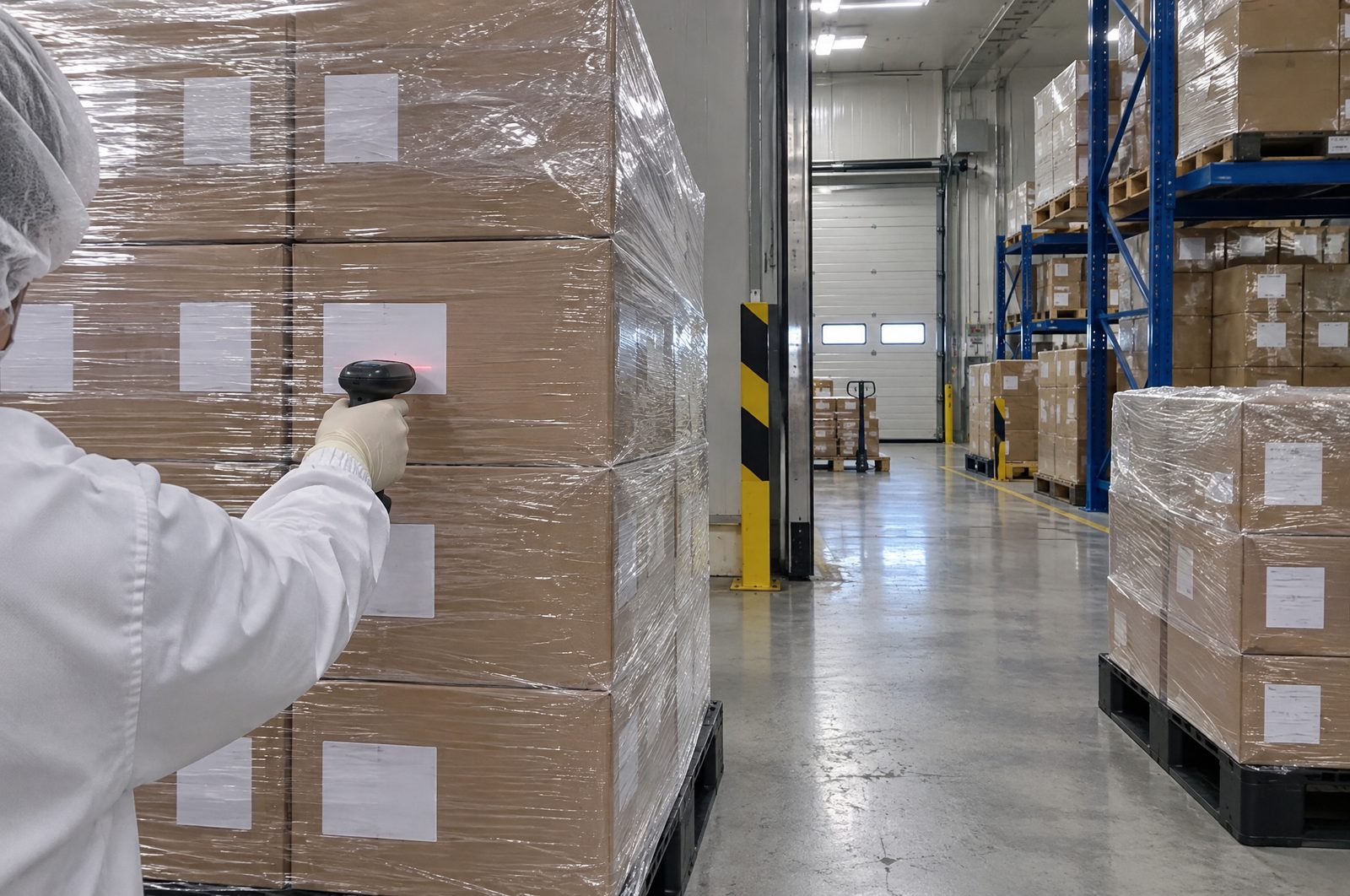
To import skincare made in Korea, the brand or its importer becomes the importer of record, registers the products where the market requires it, and hires a customs broker. We prepare the export side in Korea: the commercial invoice, packing list, export declaration, Certificate of Origin, COA and safety data sheet, and we load the goods FOB Incheon. Most orders travel by sea in a shared container (LCL).
The steps at a glance
- Before production: decide who imports, check the label, and start any registration your market needs (MoCRA, CPNP, SCPN, CNF, AICIS, SFDA, CDSCO).
- During production: choose air or sea, and LCL or FCL; share your importer details and the HS code your broker wants.
- After quality control: we issue the COA and export documents, file the Korean export declaration and hand the cargo to the carrier at Incheon.
- On arrival: your broker files the import entry, you pay duty and import tax, and the goods are released to you or your warehouse.
The documents we prepare in Korea
| Document | What it is for |
|---|---|
| Commercial invoice | Value, HS codes and Incoterm for customs |
| Packing list | Cartons, weights and sizes for the carrier and customs |
| Export declaration | Filed with Korea Customs before the goods leave |
| Bill of lading or air waybill | Issued by the carrier; needed to collect the cargo |
| Certificate of Origin | Proves Korean origin, and can lower or remove duty under a free trade agreement |
| COA (certificate of analysis) | Test results for the batch you receive |
| SDS (safety data sheet) | Asked for by carriers, warehouses and some customs offices |
| Ingredient list and product specification | For your registration, importer and safety assessor |
| Certificate of Free Sale | Asked for in India, the Gulf and parts of Asia and Latin America; USD 100 per certificate for up to 10 products, plus USD 10 per extra product |
| GMP (ISO 22716) certificate copy | Asked for by some importers and registrations; shared under NDA |
Each order's documents appear in your My page, together with an import guide for your market.
HS codes for skincare
Customs classifies goods by the Harmonized System. The first 6 digits are the same in every country; your broker adds the national digits.
| Product | Usual HS heading |
|---|---|
| Serums, ampoules, toners, creams, lotions, eye creams, masks, sunscreen, hand and body creams | 3304.99 (other beauty and skin care preparations) |
| Lip balms and lip products | 3304.10 |
| Eye make-up | 3304.20 |
| Shampoo | 3305.10 |
| Conditioners, hair treatments and scalp care | 3305.90 |
| Liquid or cream face and body washes | 3401.30 |
The usual 6-digit headings; the final national code is confirmed by your customs broker for your exact product.
Certificate of Origin and FTA duty
Korea has free trade agreements with many markets, including the US (KORUS), the EU, the UK, Canada, Australia, New Zealand, ASEAN, India and China, and RCEP covers Japan. With a valid origin certificate or origin statement, goods made in Korea can enter at the agreement's lower rate. Under some agreements the exporter states the origin on the invoice; under others a Korean authority issues the certificate.
- In some markets the normal duty on skincare is already zero; in others an FTA certificate removes a duty of several percent. Your broker tells you which applies.
- An FTA lowers normal customs duty only. Extra tariffs, such as those the US has added on many imports since 2025, and import VAT or sales tax still apply.
- Tell us before shipping that you want an FTA certificate, so it is issued with the export documents.
FOB Incheon and other Incoterms
| Term | Who pays what |
|---|---|
| EXW (Ex Works) | You collect from the factory and handle Korean export clearance yourself |
| FOB Incheon (our prices) | We deliver the goods cleared for export and loaded at Incheon; you pay the freight from there, insurance and import costs |
| CIF | The seller also pays the sea freight and insurance to your port; you pay import costs |
| DAP and DDP | Delivered to your address; under DDP the seller also pays the import duty and taxes |
Our prices are FOB Incheon. You can use your own forwarder, or ask us for a freight quote once the cartons are packed and the weights are final. We can also ship DDP, delivered to your door with import duty and taxes paid, quoted per shipment.
Sea or air, LCL or FCL
- Air: about 5 to 10 days. Best for small first orders and urgent restocks.
- Sea: the most common choice for production orders, about 2 to 3 weeks at sea to most ports, or about 4 to 6 weeks door to door with port handling and customs.
- LCL (less than container load): your cartons share a container and you pay by volume (CBM). This suits most orders.
- FCL (full container load): a whole 20 ft or 40 ft container for you, which pays off for very large orders.
- Samples: travel by EMS courier. The US ended the duty-free de minimis entry for low-value parcels in 2025, so even small parcels can be charged duty there.
Your customs broker and importer
- United States: an importer of record, a customs bond and an entry filed by a licensed customs broker. Ocean shipments also need an Importer Security Filing (ISF) at least 24 hours before loading. FDA can examine cosmetics at entry, so labels and the MoCRA listing must be in order.
- European Union: an EORI number for the importer, import VAT in the country of entry, and an EU Responsible Person with the product file and CPNP notification in place.
- United Kingdom: a GB EORI number, import VAT, and a UK Responsible Person with the SCPN notification in place.
- Canada: a Business Number with an import account, and the Cosmetic Notification Form within 10 days of first sale.
- Australia: an importer registered with AICIS, plus GST paid at import.
- India, the Gulf and Southeast Asia: a local importer that holds the product registration or notification.
Market by market details: registrations by market, label requirements by country and the countries we ship to.
Frequently asked questions
What is the HS code for skincare from Korea?
What does FOB Incheon mean?
Should I ship by LCL or FCL?
Does a Certificate of Origin remove all import costs?
Who is the importer of record?
Sources
- World Customs Organization: What is the Harmonized System
- USITC: Harmonized Tariff Schedule of the United States
- U.S. CBP: Basic import and export and Importer Security Filing
- FDA: Cosmetics importers
- European Commission: EORI number
- GOV.UK: Get an EORI number
- ICC: Incoterms rules
- Korea Customs Service and Korea FTA portal
- Canada Border Services Agency: Importing
- AICIS (Australia)