Cosmetic label requirements by country, in one place
What a skincare label must show in the US, the EU, the UK, Canada, Australia, Japan, China, Korea, the Gulf, India and Southeast Asia, and who has to be named on it. Written by the team that checks export labels every week.
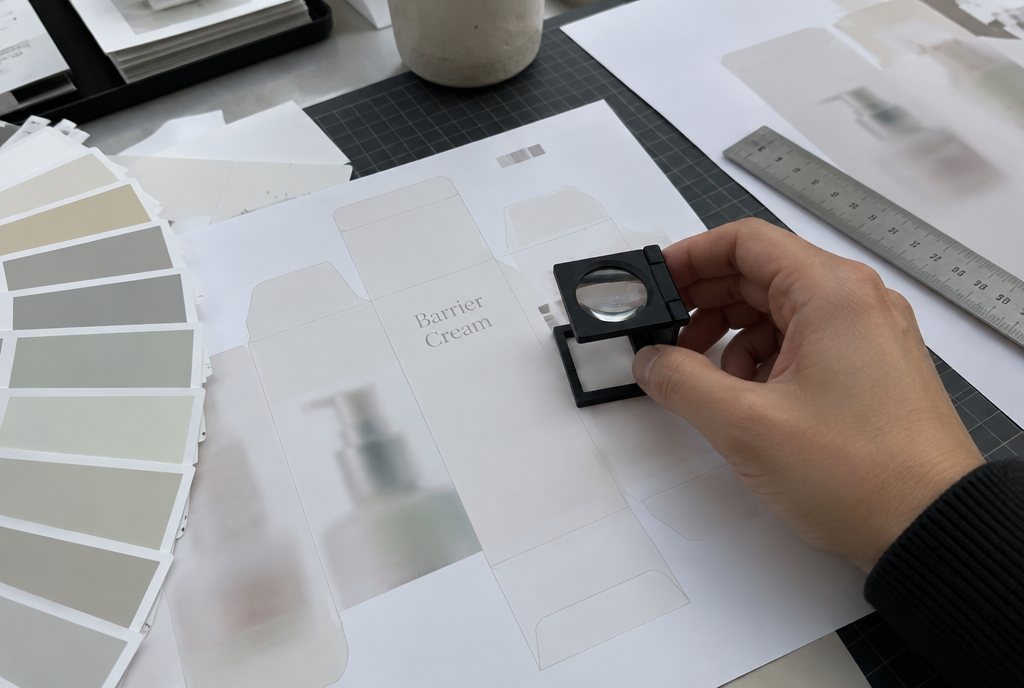
A skincare label almost everywhere needs the product name and what it does, the net content, a full ingredient list, a batch number, a date or opened-jar symbol, warnings, the name and address of the company responsible in that market, and the country of origin, such as "Made in Korea". What changes from country to country is the language, the ingredient names, the date rule and who must be named.
What almost every market asks for
- Product identity and function: what the product is, for example "hydrating serum", unless it is obvious from the pack.
- Net content: by volume for liquids (mL, and fl. oz. in the US) and by weight for creams and solids (g, and oz. in the US).
- Full ingredient list: usually with INCI names, in descending order of amount. See our guide to INCI names, PAO and claims.
- Who is responsible: the name and address of the brand, importer, distributor or Responsible Person in that market.
- Country of origin: "Made in Korea" or "Product of Korea" for skincare we make.
- Batch or lot number: printed on every unit, so a batch can be traced and recalled.
- Date: a best before or expiry date, or the opened-jar symbol (PAO, for example 12M), depending on the market.
- Directions and warnings: how to use it and any precautions, in the local language.
Label rules at a glance
The most common requirements for a skincare cosmetic. Drugs and quasi-drugs, such as US sunscreen, follow other rules.
| Market | Who is named on the label | Language | Date on the pack | Before you sell |
|---|---|---|---|---|
| United States | Manufacturer, packer or distributor ("Distributed by"), plus a US address, US phone number or website for adverse event reports | English | Not required by FDA for cosmetics; Amazon and many retailers ask for an expiration date | MoCRA product listing; the factory is FDA registered |
| European Union | EU Responsible Person, name and address | The language of each country where it is sold | Best before date if the product keeps 30 months or less; PAO symbol if longer | Safety report (CPSR), product file (PIF), CPNP notification |
| United Kingdom | UK Responsible Person with a UK address | English | Same rule as the EU | UK safety report and file, SCPN notification |
| Canada | The dealer, for example "Imported by" with a Canadian address | English and French for the name, net quantity, directions and warnings | Ask your importer; most brands print a PAO or best before date | Cosmetic Notification Form within 10 days of first sale |
| Australia | The Australian supplier or importer | English | Follow your stability data; most brands print a PAO or best before date | Importer registered with AICIS, every ingredient on its inventory |
| Japan | The Japanese marketing license holder, name and address | Japanese | Expiry date if quality does not hold for 3 years | Importer with a cosmetics marketing license files the product |
| China | The domestic responsible person in China | Chinese | Production date and shelf life, or batch number and use-by date | NMPA filing or registration before import |
| Korea (sold in Korea) | The Korean responsible seller and the manufacturer | Korean | Expiry date, or PAO with the manufacture date | The Korean seller is responsible for the product |
| Saudi Arabia and the Gulf | The local importer or registered company | Arabic, or Arabic and English | Manufacture and expiry dates are commonly required | SFDA listing in Saudi Arabia, local registration in the UAE and other Gulf states |
| India | Manufacturer and the Indian importer, name and address | English | Manufacture date and expiry (use before) date | CDSCO import registration by the Indian importer |
| Southeast Asia (ASEAN) | The local company responsible in each country | English or the local language, by country | Manufacture or expiry date; expiry is required where the product keeps 30 months or less in some countries, such as Singapore | Notification in each country by the local company |
Summary as of October 2026. Details vary by product and change over time; the market sections below link to the official sources.
United States
- Front panel: the product identity and the net content in the bottom 30% of the front panel, in US units (fl. oz. or oz.). Most brands add metric, for example "1 fl. oz. (30 mL)".
- Ingredients: in descending order; ingredients at 1% or less can follow in any order, then colors. Fragrance can be listed as "fragrance".
- Name and address: of the manufacturer, packer or distributor. If it is not the manufacturer, add "Manufactured for" or "Distributed by".
- MoCRA contact: since December 29, 2024 the label must also give a US address, a US phone number or electronic contact information, such as a website, where the brand can receive adverse event reports.
- Origin: imported products must state the English name of the country of origin, for example "Made in Korea".
- Drug claims: sunscreen and acne products are over-the-counter drugs in the US and need a Drug Facts panel.
More on the US steps: MoCRA registration, making skincare for the US and selling on Amazon and TikTok Shop.
European Union
Article 19 of the EU Cosmetics Regulation (EC) No 1223/2009 lists what must be on the container and the outer box:
- The name and address of the EU Responsible Person, and the country of origin for imported products.
- The nominal content by weight or volume. Packs under 5 g or 5 mL, free samples and single-use packs are exempt.
- The date of minimum durability ("best used before the end of" or the hourglass symbol) when the product keeps 30 months or less; otherwise the period after opening, shown with the open jar symbol.
- Precautions for use, the batch number and the function of the product.
- The ingredient list, headed "Ingredients", which may be on the outer box only. Nanomaterials carry "(nano)".
- Fragrance allergens: Regulation (EU) 2023/1545 adds dozens of allergens that must be named when above 0.001% in leave-on or 0.01% in rinse-off products. New products placed on the market from July 31, 2026 must comply, and products already on the market must by July 31, 2028.
Each member state decides the language for the content, date, precautions and function. More: what a CPNP number is and EU export steps.
United Kingdom
Great Britain follows the retained version of the EU regulation: the UK Responsible Person's name and address (a UK address), the country of origin, the weight or volume, the use-by date or PAO, precautions, a batch number, the function and the ingredients. The product is notified on the UK SCPN portal before sale. Northern Ireland follows the EU rules. More: making skincare for the UK.
Canada
- The product identity, net quantity (metric), directions and warnings in English and French.
- The ingredient list with INCI names, in descending order.
- The dealer's name and principal place of business; for imports, often "Imported by / Importé par" and the Canadian importer.
- Since April 12, 2026, named fragrance allergens above 0.001% in leave-on or 0.01% in rinse-off products.
- Every ingredient must be allowed under Health Canada's Cosmetic Ingredient Hotlist, and the Cosmetic Notification Form is filed within 10 days of first sale. We file it for about USD 450 per product.
Australia and New Zealand
In Australia the mandatory Consumer Goods (Cosmetics) Information Standard 2020 requires the ingredient list on the container, in descending order by mass or volume, or ingredients at 1% or more in descending order followed by the rest in any order and then colors. The importer must register with AICIS, the Australian Industrial Chemicals Introduction Scheme, before introducing the product. Sunscreens with a therapeutic purpose are listed with the TGA. New Zealand has its own Cosmetic Products Group Standard. More: Australia and New Zealand.
Japan
The label is in Japanese and names the Japanese marketing license holder, which takes legal responsibility. Every ingredient is listed with its Japanese label name on the outer pack, together with the lot number and content. Products whose quality does not hold for 3 years show an expiry date. Claims such as whitening or acne prevention make the product a quasi-drug, which needs approval.
China
Imported cosmetics need a Chinese label that follows the NMPA labeling measures in force since May 1, 2022, a domestic responsible person in China, and a filing (ordinary cosmetics) or registration (special cosmetics, such as sunscreen and whitening) before import. Ask your importer about the current documents, which include a quality and safety file for each product.
Korea
Skincare sold in Korea carries a Korean label with the product name, the Korean responsible seller and the manufacturer, all ingredients in Korean, the content, a batch number, the expiry date or the PAO with the manufacture date, and precautions. Skincare made only for export can follow the label rules of the importing country, which is why we print your label for your market, not for Korea.
Saudi Arabia, the UAE and the Gulf
Mandatory label text is in Arabic, often with English alongside, following the Gulf standard GSO 1943 for cosmetic labeling. Labels usually show the manufacture and expiry dates, the batch number, "Made in Korea", and the importer. Medical or therapeutic claims are not allowed on a cosmetic. In Saudi Arabia the product is listed with the SFDA, and in the UAE it is registered through a local company. Importers often ask for a Certificate of Free Sale, a COA and a heavy metal test.
India
Under the Cosmetics Rules, 2020 the Indian importer registers the product with CDSCO before import. Labels show the product name, the manufacturer and the importer with their addresses, net content in metric units, the ingredient list, the batch number, the manufacture date and the expiry date. Packaged goods also follow the Legal Metrology rules, such as the retail price and a consumer care contact. We send the documents the importer files, such as the Certificate of Free Sale, Power of Attorney, labels and specifications.
Southeast Asia
The ASEAN Cosmetic Directive sets common label items for Singapore, Malaysia, Thailand, Vietnam, Indonesia, the Philippines and the other member states: the product name and function, directions, the full ingredient list, the country of manufacture, the local company responsible, the content, the batch number, the manufacture or expiry date, and special precautions. Each country can add its own rules, such as a local language. Indonesia is phasing in mandatory halal certification for cosmetics, and its deadlines have moved before, so check the current date with your importer.
Drug rules change the label
Some products are cosmetics in one market and drugs in another. US sunscreen needs a Drug Facts panel and FDA drug rules, acne and anti-dandruff claims make a product a drug in the US and Canada, and whitening claims make it a quasi-drug in Japan. Keep your claims cosmetic, as our claims guide explains, or plan the drug route from the start.
Frequently asked questions
What must be on a cosmetic label in the US?
Do I need a Responsible Person address on an EU or UK label?
Can one label work for several countries?
Does skincare need an expiry date?
Do you design labels?
Sources
- FDA: Cosmetics Labeling Guide and Modernization of Cosmetics Regulation Act of 2022 (MoCRA)
- EUR-Lex: Regulation (EC) No 1223/2009 on cosmetic products, Article 19 and Regulation (EU) 2023/1545 on fragrance allergen labelling
- GOV.UK (OPSS): Making cosmetic products available to consumers in Great Britain
- Health Canada: Labelling of cosmetics and Cosmetic Ingredient Hotlist
- Australia: Consumer Goods (Cosmetics) Information Standard 2020 and AICIS
- Japan Ministry of Health, Labour and Welfare (MHLW)
- China NMPA
- Korea Ministry of Food and Drug Safety (MFDS)
- Saudi Food and Drug Authority (SFDA)
- CDSCO India: Cosmetics
- Singapore HSA: cosmetic products and ASEAN labelling requirements