Skincare product testing: what each test shows and when you need it
Stability, preservative challenge, microbiology, heavy metals, patch and HRIPT, efficacy and SPF tests, explained in plain words, with the tests each market expects and what they cost with us.
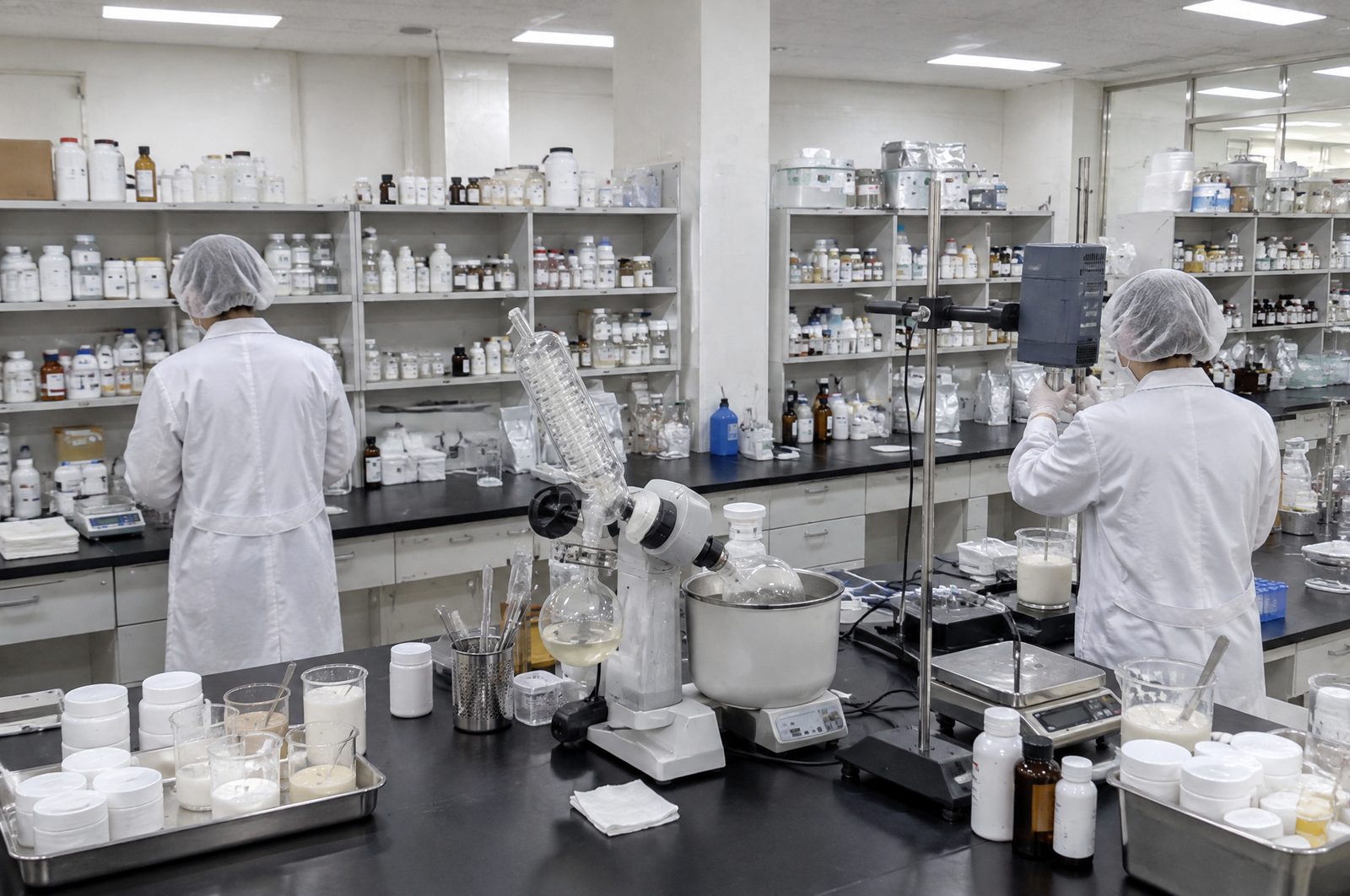
Every batch we make comes with a COA and microbiology results, and our ready library formulas already have stability data. Extra tests, such as the preservative challenge test (from USD 1,000), a patch test (from USD 1,000) or an HRIPT (from USD 3,000), are only needed when your market, your safety assessor or your claims call for them. We arrange them through our lab and accredited partner labs, so you get one complete file.
The tests at a glance
| Test | What it shows | When you need it | With us |
|---|---|---|---|
| COA and batch microbiology | The batch meets its specification and is free of harmful microbes | Every batch, every market | Included |
| Stability | Color, scent, texture, pH and viscosity hold over time and temperature | Every product; it sets the shelf life and PAO | Ready library formulas: existing data, included. A new run to your protocol: quoted per formula |
| Packaging compatibility | The formula and the container do not react, leak or deform | Every product, above all in custom containers | Included in the container and box sourcing fees |
| Challenge test (ISO 11930) | The preservative system stops contamination during use | EU and UK safety reports, water-based products, many retailers | From USD 1,000 per formula |
| Separate microbiology report | An accredited-lab report on a batch | When an importer or retailer asks for a third-party report | About USD 300 per product per batch |
| Heavy metals | Lead, arsenic, mercury and cadmium are within limits | Often asked for in the Gulf, Asia and by importers | About USD 150 |
| Patch or low-irritation test | The product does not irritate skin in a supervised test on volunteers | Claims such as "low irritation" or "suitable for sensitive skin" | From USD 1,000 |
| HRIPT | Repeated application on volunteers shows no irritation or sensitization | "Dermatologist tested" (50 people) or "hypoallergenic" (100 people) | From USD 3,000 (50 people) or USD 5,500 (100 people) |
| Efficacy tests | Measured results, such as moisture, brightening, wrinkles or soothing | Any measured claim, such as "72-hour hydration" | Quoted per claim |
| SPF and PA | The level of UVB and UVA protection | Every sunscreen | Quoted per product |
| Vegan certification | An independent body confirms no animal-derived ingredients | When you want a vegan logo on the pack | Quoted per product |
Test prices are starting prices for a standard skincare product; the written quote gives the exact price. Tests are not credited against the production order.
Stability: the shelf life comes from here
A stability test keeps samples at different temperatures and light conditions and checks them over weeks and months for changes in color, scent, texture, pH and viscosity. The result sets the shelf life, usually about 2 to 3 years unopened for our library formulas, and the PAO printed on the pack, often 12 months. Our ready library formulas already have this data, so a brand using one does not pay for a new run. More in our article on stability testing.
Challenge test: does the preservative work?
The challenge test, under ISO 11930, adds bacteria, yeast and mold to the product and measures how fast the preservative system brings them down over 28 days. EU and UK safety assessors usually ask for it before they sign a CPSR, and it matters most for water-based products, jars and preservative-free claims.
Microbiology and heavy metals
Each production batch is tested for microbes before release, and the results come with the COA. Some importers and retailers want an independent report from an accredited lab, and markets in the Gulf and Asia often ask for a heavy metal test for lead, arsenic, mercury and cadmium.
Patch test and HRIPT: tests on people, never on animals
A patch test applies the product under a patch on volunteers' skin to check for irritation. An HRIPT (human repeat insult patch test) repeats the application over several weeks and then checks again, to see whether the skin becomes sensitized. These tests back claims such as "dermatologist tested" and "hypoallergenic". They run with human volunteers under a dermatologist's supervision; we do not test on animals.
Efficacy and SPF tests
An efficacy test measures a result on volunteers with instruments, such as skin moisture, wrinkle depth or brightness, so a measured claim like "hydration for 24 hours" has proof behind it. Every sunscreen needs SPF and PA (UVA) tests; in the US sunscreen is an over-the-counter drug with its own testing and labeling rules, so we quote it case by case. See private label sunscreen.
Which tests your market expects
- US: MoCRA requires the brand to have adequate safety substantiation for each product, without naming specific tests. Most brands keep stability, microbiology and a challenge test on file.
- EU and UK: the safety assessor writing the CPSR asks for stability, microbiology, the challenge test, packaging compatibility and the full formula with raw material data. Our partner prepares the CPSR and PIF for USD 1,250 per formula.
- Canada and Australia: no pre-market test list, but the brand must be able to show the product is safe; the same file works.
- Gulf, India and Southeast Asia: importers often ask for a COA, a heavy metal test, a microbiology report and a Certificate of Free Sale.
- Any market: a claim needs the test that proves it.
Frequently asked questions
Which tests does a new skincare product need?
How much does a challenge test cost?
What test do I need to say dermatologist tested?
Do you test on animals?
Sources
- ISO 11930: Evaluation of the antimicrobial protection of a cosmetic product
- FDA: Product testing of cosmetics
- FDA: MoCRA safety substantiation
- EUR-Lex: Regulation (EC) No 1223/2009, Article 10 and Annex I (safety report)
- European Commission: SCCS Notes of Guidance
- FDA: Sunscreen, an over-the-counter drug