Is a skincare business profitable? The real margins, channel by channel
Skincare has high gross margins and thin net margins. Here is the math on one serum sold through your own store, on Amazon and wholesale, with 2026 fees and a break-even example.
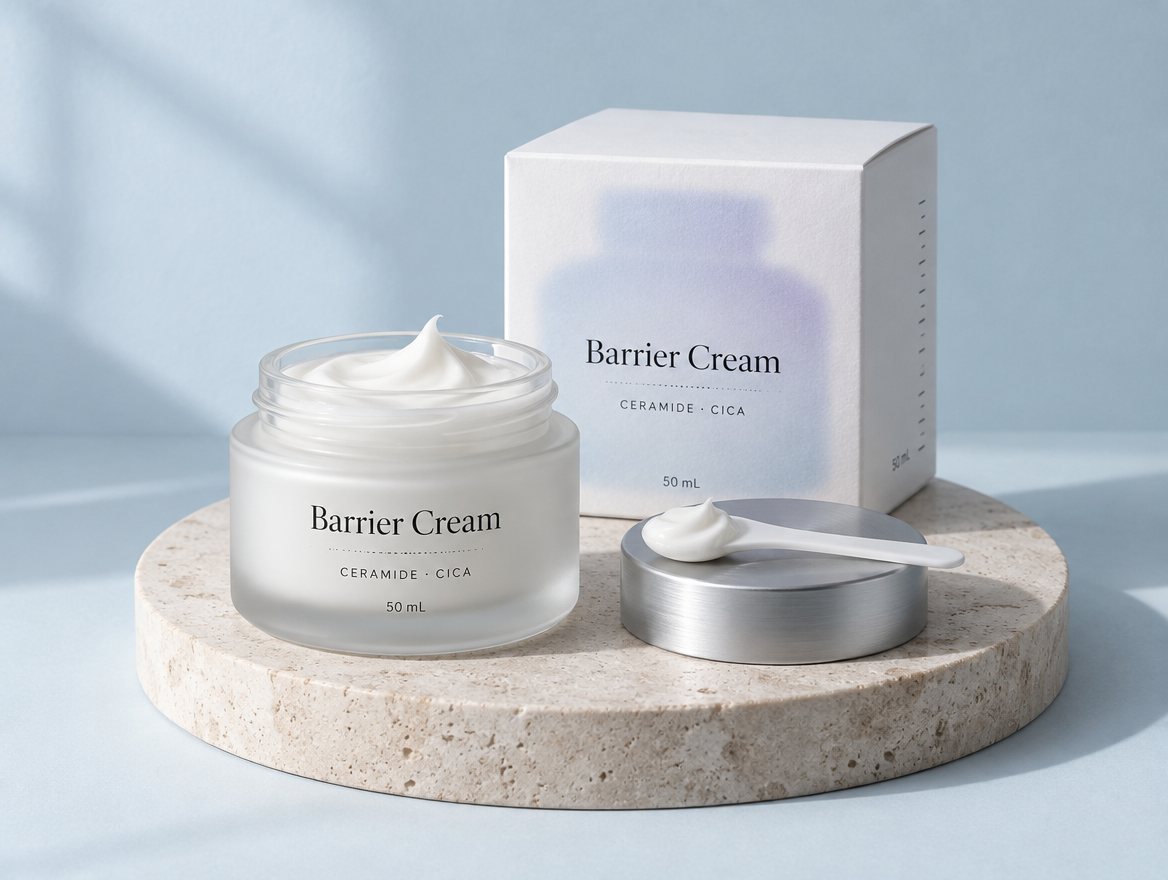
Yes, a skincare business can be profitable, mostly through repeat customers. Gross margins are high: in our example a serum that costs about $6.30 to land sells for $38. After card or marketplace fees, shipping and the marketing that wins each order, it leaves about $5 to $16 per unit, depending on the channel.
The example uses our starting price for the product and clearly labeled assumptions for everything else. Swap in your own numbers; the structure is what matters.
Skincare profit margin: gross margin versus what you keep
Gross margin is the selling price minus the landed cost of the product. It is the number most articles quote, and in skincare it is high: 83% in our example, and about 71% for e.l.f. Beauty, which sells through retailers as well as online, in its 2026 fiscal year.
Net margin is what is left after fees, shipping, marketing, staff and overheads, and it is far lower. A brand can have a beautiful gross margin and still lose money on every first order.
The landed cost of one serum
At KoreanOEM a private label serum starts from $3.70 per unit at 500 units, with a library formula, a stock bottle and a one-color label. Getting it onto your shelf adds a box, freight, duty and customs clearance.
| Cost line | Per unit | Basis |
|---|---|---|
| Serum, 500 units | $3.70 | Our starting price |
| Printed box | $0.60 | Typical market price |
| Air freight share | $1.00 | Example |
| US duty, 12.5% of goods value | About $0.55 | Rate as of September 2026 |
| Customs clearance share | $0.45 | Example |
| Landed cost used below | About $6.30 | Example |
The retail price of $38 is hypothetical. Price for your own costs and position, not for this example.
Is a skincare business profitable? One serum, three channels
| Per unit | Your store | Amazon FBA | Wholesale |
|---|---|---|---|
| Price you receive | $38.00 | $38.00 | $19.00 |
| Landed cost | $6.30 | $6.30 | $6.30 |
| Card or marketplace fee | $1.40 | $5.70 | $0.00 |
| Shipping or fulfillment | $6.00 | $4.70 | $0.50 |
| Returns and damage | $1.00 | $1.00 | $0.00 |
| Left before marketing | $23.30 | $20.30 | $12.20 |
| Marketing per sale | $18.00 | $4.60 | $0.00 |
| Left per unit | $5.30 | $15.70 | $12.20 |
Your own store
Shopify's US Basic plan charges 2.9% plus 30 cents per online card payment, so $1.40 on a $38 order. Postage and packing at $6.00 assumes free shipping; a free-shipping threshold, such as two products, spreads that cost over more units. The $1.00 line is an allowance for refunds and broken parcels, since an opened product usually cannot be resold.
The big number is marketing. If ads cost $18 to win a first order, you keep about $5.30. At $30 you lose money on the first order and only profit when the customer comes back, when the marketing line drops to almost zero and each sale leaves about $23.30.
Amazon with FBA
Amazon's referral fee for beauty, health and personal care is 15% of the price for items over $10 (8% at $10 or less), so $5.70 here, and the Professional selling plan costs $39.99 a month. FBA fulfillment for a small boxed serum typically runs about $4 per unit on the 2026 rate card, including the temporary 3.5% fuel and logistics surcharge Amazon introduced on April 17, 2026.
We add $0.60 for shipping stock into Amazon's warehouses. Ads at about 12% of sales are an assumption; you may spend more while a new listing has no reviews.
Wholesale to shops
Retailers typically expect to double the wholesale price, so they pay about half of retail: $19 on a $38 serum. You earn less per unit, but there are no card fees, no per-order postage and no ads for each sale, and one order can move 24 or 48 units.
Wholesale marketplaces take a commission. Faire, for example, charges North American brands 15% on marketplace orders plus a payment processing fee, which would cut $12.20 to about $9.35 before that fee. Shops that buy direct may also ask for 30 to 60 days to pay.
A break-even example
Say your one-off launch costs, not counting stock, are $4,000: design, trademark, website setup, photos and a first year of insurance. Divide by what each sale leaves.
| Channel | Left per unit | Units to earn back $4,000 |
|---|---|---|
| Your store, ad-driven first orders | $5.30 | About 755 |
| Your store, repeat customers | $23.30 | About 172 |
| Amazon FBA | $15.70 | About 255 |
| Wholesale, direct | $12.20 | About 328 |
Ad-driven first orders alone need one and a half production runs of 500 to earn back the launch. Repeat customers do it in about a third of one. That gap is the honest answer to whether skincare is profitable: it is, when customers come back.
Monthly fixed costs raise the target. For example, $150 a month in store plan, apps and insurance needs about 28 more ad-driven sales, or 7 repeat sales, every month.
How much do skincare brands make?
Private brands rarely publish results, so listed companies are the best public benchmark. e.l.f. Beauty, whose portfolio includes skincare, reported net sales of $1,636.5 million for the year to March 31, 2026, with a gross margin of about 71%.
Its selling, general and administrative costs (marketing, distribution, staff and more) were $1,026.1 million, about 63% of sales. GAAP net income was $26.3 million, or $185.9 million on the company's adjusted basis. The lesson scales down: high gross margins pay for selling the product, and what is left depends on how efficiently you win and keep customers.
What makes a skincare brand profitable, or not
- Repeat purchase. Products people use up and reorder carry the business. Refill reminders and subscriptions help.
- Order value. A routine set shares one shipment and one ad cost across two or three products.
- Price with room. Price for your real costs, not a competitor's. Constant discounting eats the margin that pays for shipping and ads.
- Small, frequent runs. Stock that expires or never sells is pure loss. Our reorders take 4 to 6 weeks, so you do not need a year of stock.
- Stock packaging first. Custom decoration adds cost and weeks before you know what sells.
- No ad cost per sale. Estheticians wondering whether a skin care business is profitable have an edge: selling to clients they already see skips the biggest line in the table. More in our guide to a skincare line for estheticians.
What sinks brands is usually the opposite: paid ads with no repeat buyers, too many products too early, and first runs sized for hope rather than data.
How larger runs change your margins
Unit prices fall with quantity. Our estimated serum price is $2.96 per unit at 1,000 units, $2.41 at 3,000 and $2.15 at 5,000, against $3.70 at 500: about 20%, 35% and 42% lower. Bigger shipments can also go by sea, which takes 4 to 6 weeks but costs less per unit than air.
On a $38 serum, moving from 500 to 3,000 units adds more than a dollar of margin per unit on the product alone. A bigger run also ties up cash for longer and raises the risk of unsold stock, so scale when sell-through proves demand. See per-unit numbers for eight products in our 1,000-unit cost breakdown, the fees to plan for in the cost and MOQ guide, and your launch budget in how much it costs to start a skincare line.
To run this math on your own product, ask for a written quote. It arrives within one business day and itemizes formula, packaging, decoration, tests, documents and freight, so every line of your landed cost is real.
Frequently asked questions
What is a good profit margin for skincare?
How long does it take a skincare brand to become profitable?
Is private label skincare profitable?
What does Amazon charge to sell skincare?
Sources
- Amazon: Selling plans and referral fees
- CNBC: Amazon adds 3.5% fuel and logistics surcharge for sellers (April 2, 2026)
- Shopify pricing
- Faire Help Center: Pricing policy and retailer margin
- Faire: An update to Faire's pricing in North America
- e.l.f. Beauty: Fourth quarter fiscal 2026 results (SEC filing)
- USTR: Notice of Actions in Section 301 Investigations (July 2026)