Korean skincare OEM 1,000 units cost: per-unit and total prices by product
Estimated prices at 1,000 units for toner, essence, serum, ampoule, cream, foam cleanser, sheet masks and sunscreen, plus what is included, what adds cost and what a quote should list.
At KoreanOEM, 1,000 units of a Korean skincare product cost roughly $550 to $3,960 before freight, from about $0.55 per sheet mask to $3.96 per ampoule. A serum is estimated at $2.96 per unit, or $2,960 in total. Prices assume a library formula, stock container and one-color label; custom packaging, tests, documents and freight are separate lines.
Korean skincare OEM cost at 1,000 units, by product
The table uses our price breaks. For products with a 500-unit minimum, 1,000 units cost about 20% less per unit than the 500-unit starting price. Sheet masks and sunscreen start at 1,000 units, so their 1,000-unit price is the starting price.
| Product | Minimum | Per unit at 1,000 | Total for 1,000 |
|---|---|---|---|
| Toner | 500 | $1.68 | $1,680 |
| Essence | 500 | $1.92 | $1,920 |
| Serum | 500 | $2.96 | $2,960 |
| Ampoule | 500 | $3.96 | $3,960 |
| Cream | 500 | $2.48 | $2,480 |
| Foam cleanser | 500 | $1.60 | $1,600 |
| Sheet mask | 1,000 | $0.55 | $550 |
| Sunscreen | 1,000 | $3.10 | $3,100 |
These are estimates for the filled, labeled product. Your written quote gives the exact number for your formula, container and decoration.
What the price per unit includes
- A library formula. An existing formula from our range, so there is no development fee. You receive the full INCI list.
- A stock container. Bottles, jars, tubes, vials and pumps from stock, with no tooling cost.
- A one-color label with your logo, adapted by our team, and compliant label copy for your market.
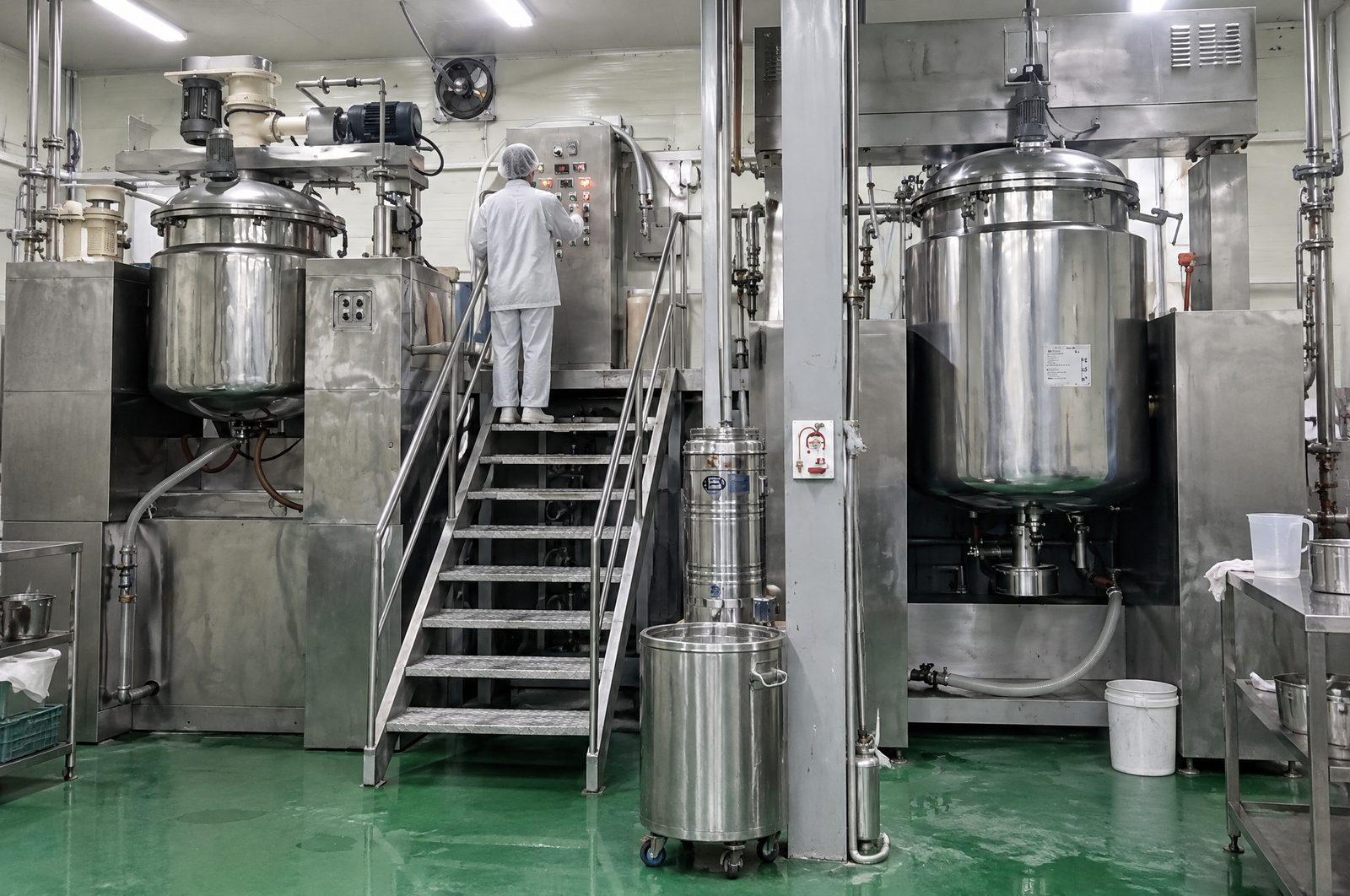
- Production on a GMP line. Filling and labeling in an ISO 22716 (GMP) certified, FDA registered factory in Korea.
Stability, challenge (microbiology) and patch tests are planned into every project and itemized on the quote, next to documents and freight.
What adds cost to a 1,000-unit order
Formula and actives
A custom formula adds a development fee, credited against your first order, and takes 12 to 16 weeks instead of about 10. Actives change raw material cost too: a serum with a high concentration of a costly active is priced higher than the same base with a low one.
Packaging and decoration
Custom colors, silk screen or hot stamping, and printed boxes are quoted separately, and each decoration design needs a one-time plate or die. In the wider market, printed boxes typically cost $0.30 to $1.50 a unit at small runs, so $300 to $1,500 for 1,000. See what is available without tooling on our packaging page.
Tests and documents for your market
The US needs the FDA product listing under MoCRA. The EU needs a CPNP notification through an EU Responsible Person, and the UK an SCPN notification with a UK Responsible Person. We prepare these files, as well as ASEAN, GCC and Japan requirements. Market-specific tests, such as SPF testing, are added only when your market requires them.
Freight
Air takes about 5 to 10 days; sea takes about 4 to 6 weeks and costs less per unit on larger shipments. Air is priced per kilogram of actual or volume weight, whichever is higher. As a rough guide, 1,000 boxed 30 mL glass serums weigh about 100 to 140 kg with cartons, and 1,000 toners of 150 mL closer to 200 kg.
Duties and clearance
As of September 2026, goods made in South Korea pay a combined 12.5% US duty under a Section 301 action in force from July 24, 2026. The normal rate for most skincare (HTS 3304.99.50) is 0%, so the 12.5% is usually the whole duty: $125 for every $1,000 of goods. The UK charges 0% duty on most skincare plus 20% import VAT. Add your customs broker's fee, and confirm rates before you order, because US tariffs changed several times in 2025 and 2026.
How to lower the cost of a 1,000-unit order
The biggest savings on private label skincare at 1,000 units come from decisions, not negotiation:
- Start from a library formula. There is no development fee, samples are free for qualified projects, and delivery takes about 10 weeks instead of 12 to 16.
- Keep the stock container and a one-color label for the first run. Pay for a printed box when you sell in shops, where the box does the selling.
- Ship two or three products together. One shipment and one customs entry spread freight and clearance over more units.
- Choose the container with the landed cost in mind. A heavy glass jar costs more to buy and more to fly than a light plastic bottle.
- Decide early. You approve the sample before production, so settle the formula, container and label then. Changes after approval cost time.
- Move to sea freight as runs grow. It takes about 4 to 6 weeks but costs less per unit than air on larger shipments.
1,000 units versus 500, 3,000 and 5,000
Here is the serum at each price break. The same percentages apply to other products with a 500-unit minimum.
| Run size | Per unit | Total | Versus 500-unit price |
|---|---|---|---|
| 500 | $3.70 | $1,850 | Starting price |
| 1,000 | $2.96 | $2,960 | About 20% lower |
| 3,000 | $2.41 | $7,230 | About 35% lower |
| 5,000 | $2.15 | $10,750 | About 42% lower |
Doubling from 500 to 1,000 units raises the bill by about 60%, not 100%, because the unit price drops about 20%. A 3,000-unit run costs about 2.4 times the 1,000-unit bill for three times the stock, and 5,000 about 3.6 times for five times the stock.
Lower unit prices only pay off if the stock sells. Choose 1,000 when you have pre-orders, a wholesale account or a sales plan that clears the run well within its shelf life, which the stability report tells you. Otherwise start at 500 and reorder in 4 to 6 weeks. To see what each unit price means for your margin, read is a skincare business profitable.
Korean skincare OEM MOQ: do you need 1,000 units?
If a Korean skincare manufacturer quotes an MOQ of 1,000 units, that is already on the low side. Large Korean factories often set minimums of several thousand units per product, because their lines are sized for big brands. At KoreanOEM the minimum is 500 units for most skincare, 1,000 for sheet masks, sunscreen and some others, and 3,000 for single-dose sachets. Smaller trial runs of library formulas are possible on request.
Whoever you work with, ask whether small runs use the same GMP line and raw materials as large ones. A low minimum should change the price per unit, not the quality. Our guide to Korean OEM cost and MOQ covers the fees that quotes often leave out. For the full launch budget beyond production, see how much it costs to start a skincare line.
What a written quote should itemize
A quote you can compare line by line lists:
- Formula: library or custom, any development fee and how it is credited.
- Unit price at your quantity and at the next price break.
- Container and closure: material, size, stock or custom.
- Decoration and boxes: label type, silk screen or hot stamping, plate and die charges, printed carton.
- Tests: stability, challenge and patch, plus anything your market adds.
- Documents: INCI list, certificate of analysis, safety data sheet, certificate of origin, and your market's registration file.
- Freight terms: ex-works, FOB Busan or delivered to your door, which are three different prices.
- Timing and payment: lead time, reorder lead time, deposit and balance.
Our quotes arrive within one business day and itemize formula, packaging, decoration, tests, documents and freight. Request yours with the products and quantities you have in mind.
Frequently asked questions
What is the MOQ for Korean skincare OEM?
How much does it cost to make 1,000 bottles of serum?
Is 1,000 units too many for a first order?
How long does a 1,000-unit order take?
Does the unit price include shipping?
Sources
- FDA: OTC Monograph M020, Sunscreen Drug Products for OTC Human Use
- European Commission: Sunscreen products
- FDA guidance: Registration and Listing of Cosmetic Product Facilities and Products
- USTR: Notice of Actions in Section 301 Investigations (July 2026)
- USITC Harmonized Tariff Schedule: 3304.99.50
- UK Trade Tariff: commodity code 3304990000
- GOV.UK: Making cosmetic products available to consumers in Great Britain