Low MOQ private label skincare: what the minimum covers and what a small run costs
A low minimum on the formula means little if the bottle, the print or the box needs thousands of pieces. Here is how minimums stack up, what 500 units cost, and how to size a first run.
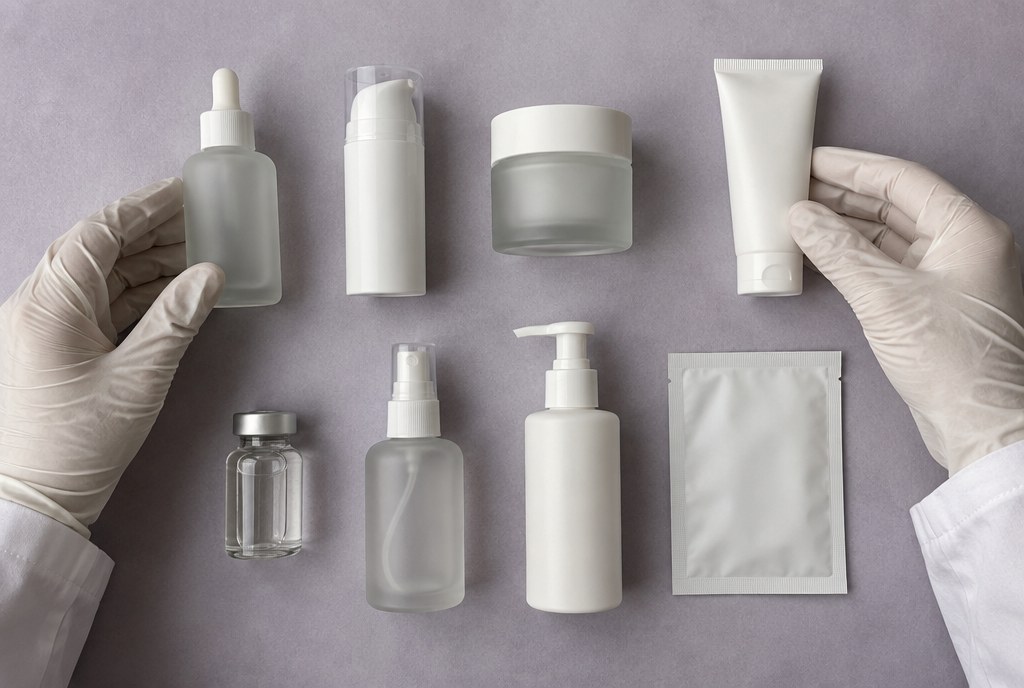
Low MOQ private label skincare means ordering a small first run, usually 100 to 1,000 units per product, of a ready formula in stock packaging with your own label. The real minimum is the highest of three: the formula batch, the container and the decoration. At KoreanOEM, most skincare starts at 500 units per product.
What "low MOQ" really means: three minimums, not one
When a supplier advertises private label skincare with a low MOQ, the headline number usually refers to the formula. Your order can only be as small as its largest minimum, and three different things set that.
The formula batch
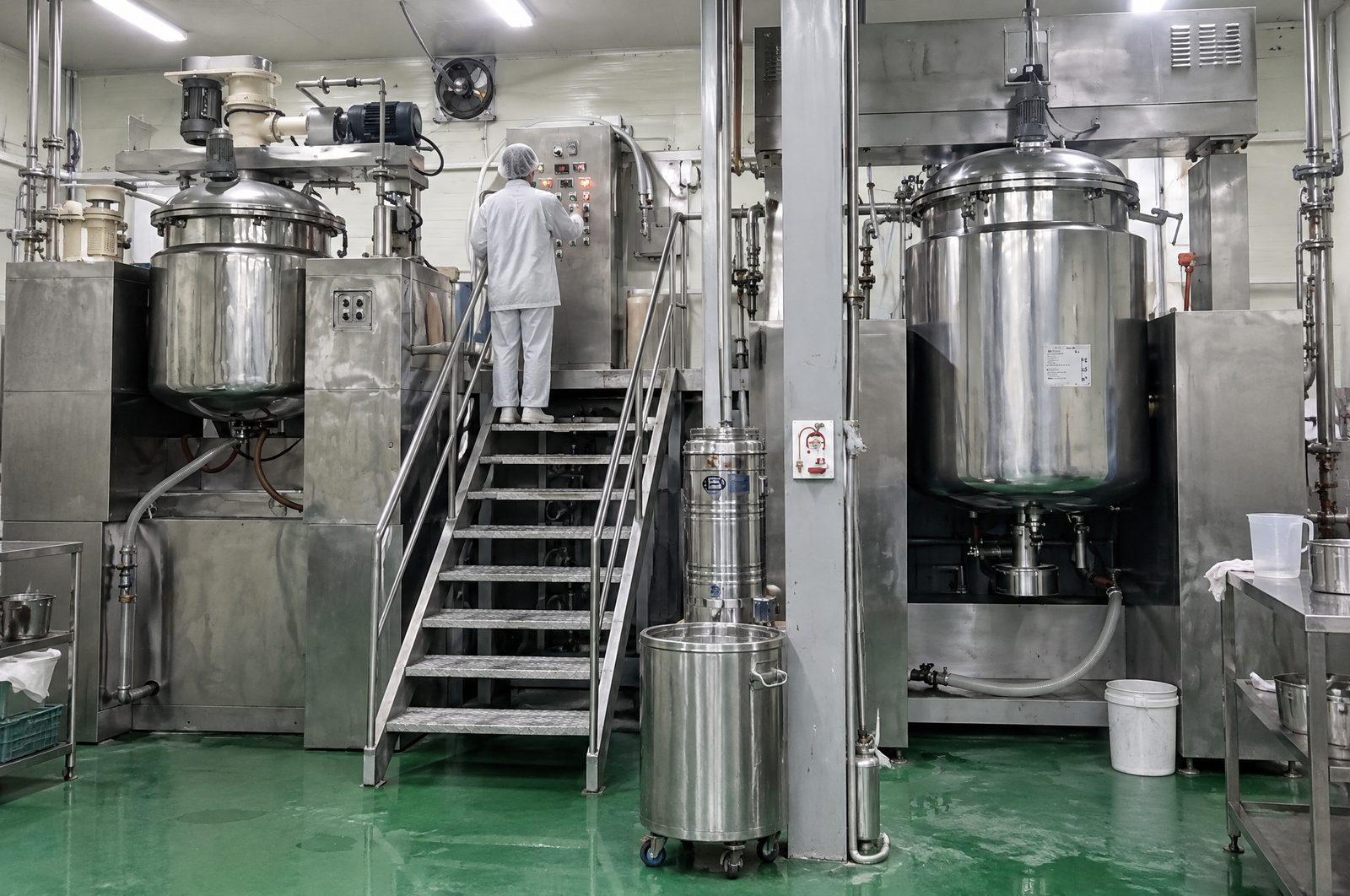
Mixing tanks and filling lines have a smallest practical batch, plus set-up and cleaning time. For scale, 500 bottles of a 30 mL serum hold only 15 liters of formula. A library formula the lab already makes keeps the minimum low. A new formula, or a special active sold by the kilo, pushes it up, because the lab has to buy and test more than your run needs.
The container
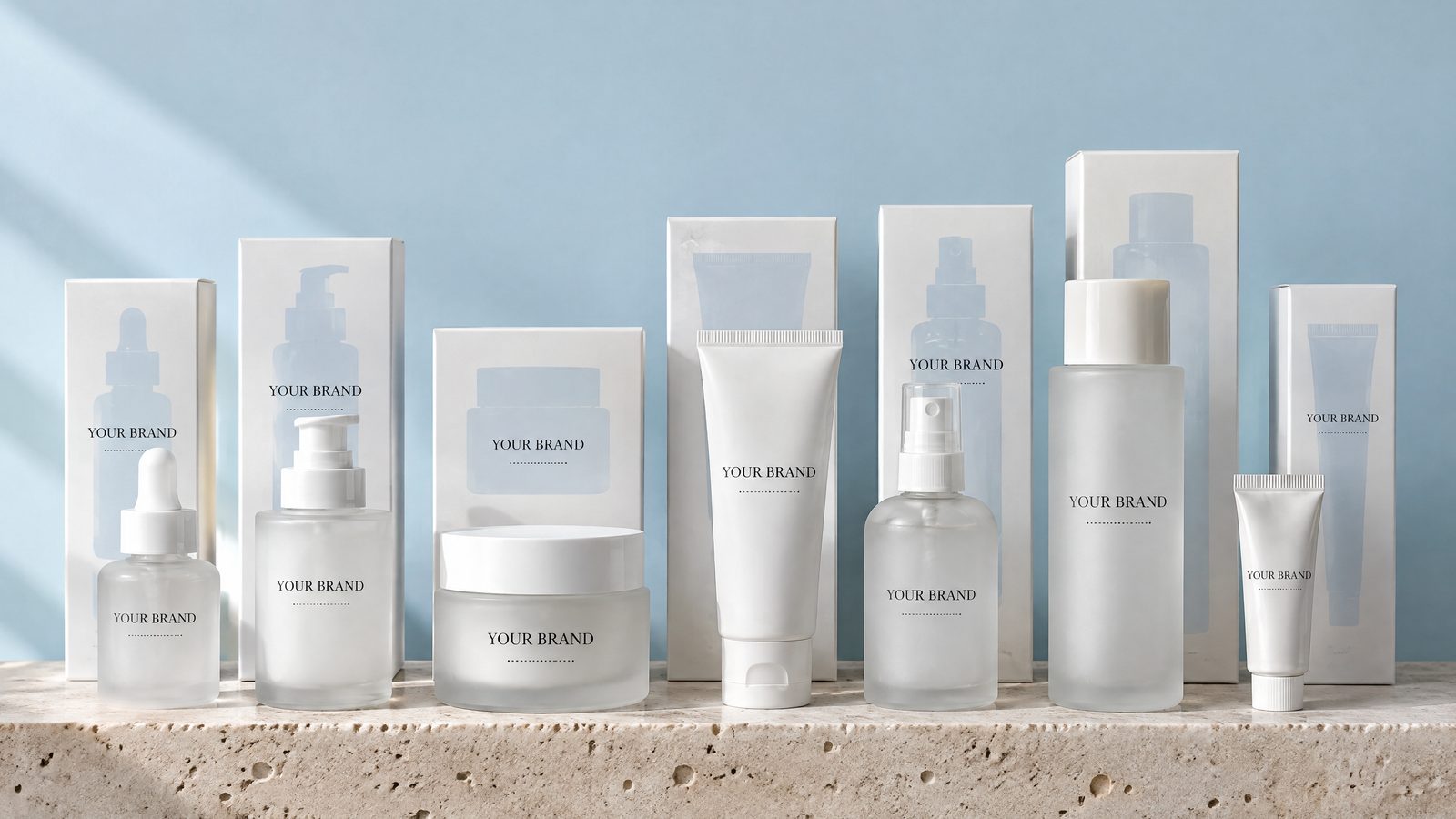
Stock bottles, jars, tubes and pumps are made in large volumes and held in inventory, so you can buy a few hundred. A custom color or a new mold is made just for you, and the packaging maker sets its own minimum, often thousands of pieces. Ask about it before you fall in love with a color.
Decoration and boxes
A printed label can be run in small numbers. Silk screen and hot stamping need plates or dies, and a printed carton has its own print run. Stock containers usually carry no tooling cost, while custom colors, silk screen, hot stamping and printed boxes are quoted separately, often with their own minimums.
| Part | Keeps the minimum low | Pushes it up |
|---|---|---|
| Formula | Library formula, common actives | New development, rare actives |
| Container | Stock bottle, jar, tube or pump | Custom color or new mold |
| Decoration | Printed label | Silk screen, hot stamping |
| Box | No box, or a plain box with a label | Fully printed custom carton |
Browse the stock containers and decoration options to see which choices keep an order small.
Your low MOQ options, from no minimum to 1,000 units
| Route | Typical minimum | Unit cost | What you control |
|---|---|---|---|
| Stock white label, printed on demand | 1 unit and up | Highest | Your label |
| Small lab batch | Often 100 to 300 units | High | Formula choice, simple tweaks |
| OEM run from a library formula | 500 to 1,000 units | Lower, falls with volume | Formula tweaks, packaging, documents |
No minimum. Private label skin care with no minimum does exist: some programs keep finished products in stock and print your label per order, often with dropshipping. They are good for testing a market, but the formula is shared and fixed, and each unit carries the supplier's storage and handling. The full trade-off is in private label skincare dropshipping.
Small labs, 100 to 300 units. A small lab can fill a few hundred units from its own formulas. Ask what equipment fills your batch, whether the site is GMP certified, and whether you get a batch number and a certificate of analysis.
OEM runs, 500 to 1,000 units. This is where the unit price starts to fall, the formula can be adjusted and you choose the packaging. For a first product that has to carry full export documents, it is often the best balance of cash at risk and unit cost. If you are not sure which of these you are being offered, see white label vs private label skincare.
Unit cost versus quantity
The unit price falls as the run grows, because set-up, line cleaning, quality control and paperwork cost about the same for 500 units as for 5,000. Here is how the starting price of a serum moves at KoreanOEM, with a library formula, a stock container and a one-color label (estimates above 500 units):
| Quantity | Per unit | Goods total |
|---|---|---|
| 500 | $3.70 | $1,850 |
| 1,000 | $2.96 | $2,960 |
| 3,000 | $2.41 | $7,230 |
| 5,000 | $2.15 | $10,750 |
| 10,000 | $1.85 | $18,500 |
Two things stand out. Going from 500 to 1,000 units cuts the unit price by about a fifth, but the total bill still rises by more than half. And 10,000 units halve the unit price but mean twenty times the stock.
So the goal is not the lowest unit price. It is the smallest run you can sell through at a good margin.
Other starting points: a toner from $2.10 at 500 units, a cream from $3.10 at 500 units, and sheet masks from $0.55 at 1,000 units. Final prices depend on the formula, container, decoration and quantity, and a written quote itemizes formula, packaging, decoration, tests, documents and freight. For how the numbers are built, read what Korean skincare OEM really costs, or see the options for a private label serum.
Costs that do not shrink with the run
Some costs are charged per product, not per unit, so they weigh more on a small run:
- Artwork for the label and box, and any print plates or dies.
- Testing. Stability and challenge (microbiology) tests are priced per formula and container, not per unit.
- Market paperwork. In the EU, every product needs a safety assessment and a cosmetic product safety report before it goes on sale. In the US, the responsible person lists each product with FDA within 120 days of marketing it, unless a small business exemption applies.
- Samples, couriers and freight, which carry minimum charges per shipment.
The US exemption covers businesses with average US cosmetics sales under $1,000,000 a year over the previous three years (adjusted for inflation), except for certain products, such as those that regularly touch the mucous membrane of the eye. The EU safety report has no size exemption. Spread over six products, these fixed costs multiply, which is the best argument for launching one or two products well.
How to plan a first run that is small but not wasteful
- Pick one hero product, or two that sell together. A serum and a moisturizer make a routine; six products make six sets of fixed costs.
- Start from a library formula and a stock container. Put the budget into the label, the box and the launch.
- Size the run to your sales plan. If you expect to sell 60 to 100 units a month, 500 units is five to eight months of stock. Check that against the shelf life your stability test supports. In the EU, a product that keeps for 30 months or less must carry a best-before date.
- Keep the label flexible. A one-color label on a stock bottle is cheap to reprint when you change a claim or add a market.
- Plan the reorder before you launch. Add the reorder lead time to the shipping time. With a 4 to 6 week reorder and 4 to 6 weeks at sea, reorder when about three months of stock remain, or budget for air freight.
- Budget the whole run, not the unit price. For 500 serums that is $1,850 in goods, plus decoration and boxes, tests and documents, and freight.
Red flags in low MOQ offers
Before you pick a low MOQ skincare manufacturer, watch for these:
- A tiny minimum that includes custom colors or printed boxes. Packaging makers have minimums too, so ask who pays for the leftover bottles and cartons.
- No answer on where and how your batch is filled, or no GMP certificate for that site.
- No batch number, no certificate of analysis and no full ingredient list.
- A "custom" formula delivered in days, or samples that differ from the formula you are quoted.
- Full prepayment before you approve a sample.
A low minimum should change the price per unit, not the way the product is made.
Where KoreanOEM fits
If you are looking for a Korean skincare manufacturer with a low MOQ, this is our range: 500 units for most skincare, 1,000 for sheet masks and a few other products, and 3,000 for single-use sachets. Smaller trial runs are possible for library formulas, on request. With a library formula and stock packaging, plan about 10 weeks from brief to delivery. Reorders take 4 to 6 weeks, then about 5 to 10 days by air or 4 to 6 weeks by sea.
Library samples are free for qualified projects, and nothing is produced until you approve the sample. Stability, challenge and patch tests are planned in. If you know the product and a rough quantity, ask for a written quote. It arrives within one business day and shows every line, so you can see exactly what a small run costs.
Frequently asked questions
What is a good MOQ for a new skincare brand?
Can I get private label skincare with no MOQ?
Why does the unit price drop so much at higher quantities?
Do packaging minimums affect a low MOQ order?
Is low MOQ skincare lower quality?
Sources
- Regulation (EC) No 1223/2009 on cosmetic products (EUR-Lex)
- FDA: Registration and Listing of Cosmetic Product Facilities and Products
- FDA: Guidance for Industry, Registration and Listing of Cosmetic Product Facilities and Products