How to start a skincare line with no money (or very little)
You cannot make inventory for $0. You can test demand for almost nothing, launch one product at a small minimum, and let pre-orders pay part of the first run.
You cannot start a skincare line with literally no money, because inventory, labels and insurance cost real cash. You can start with very little: validate demand for free with samples and a waitlist, take pre-orders, and launch one hero product at a 500-unit minimum. A lean first run needs roughly $2,000 to $3,500 in cash.
Almost everything else can wait: an office, a full range, custom packaging, paid ads and professional photos. The most expensive mistake at this stage is stock that does not sell, so the goal is not to spend nothing. It is to spend only after customers have shown you they want the product.
What to do before you spend anything
Validation costs time, not cash. Work in this order:
- Pick one customer and one problem. "Dry, tight skin after cleansing" is a product brief. "Clean skincare for everyone" is not.
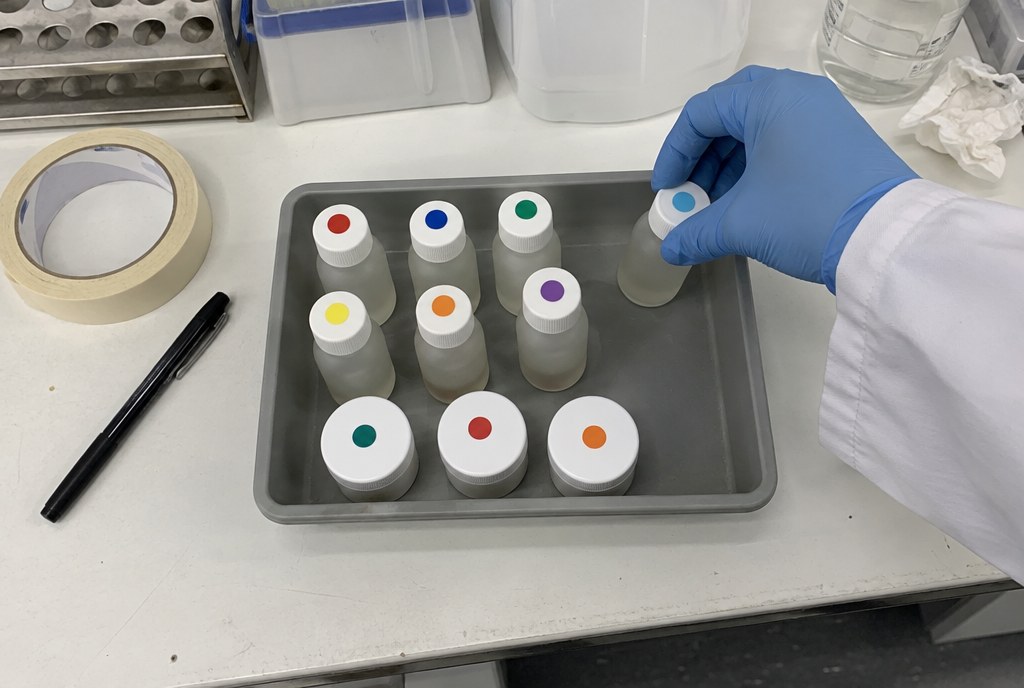
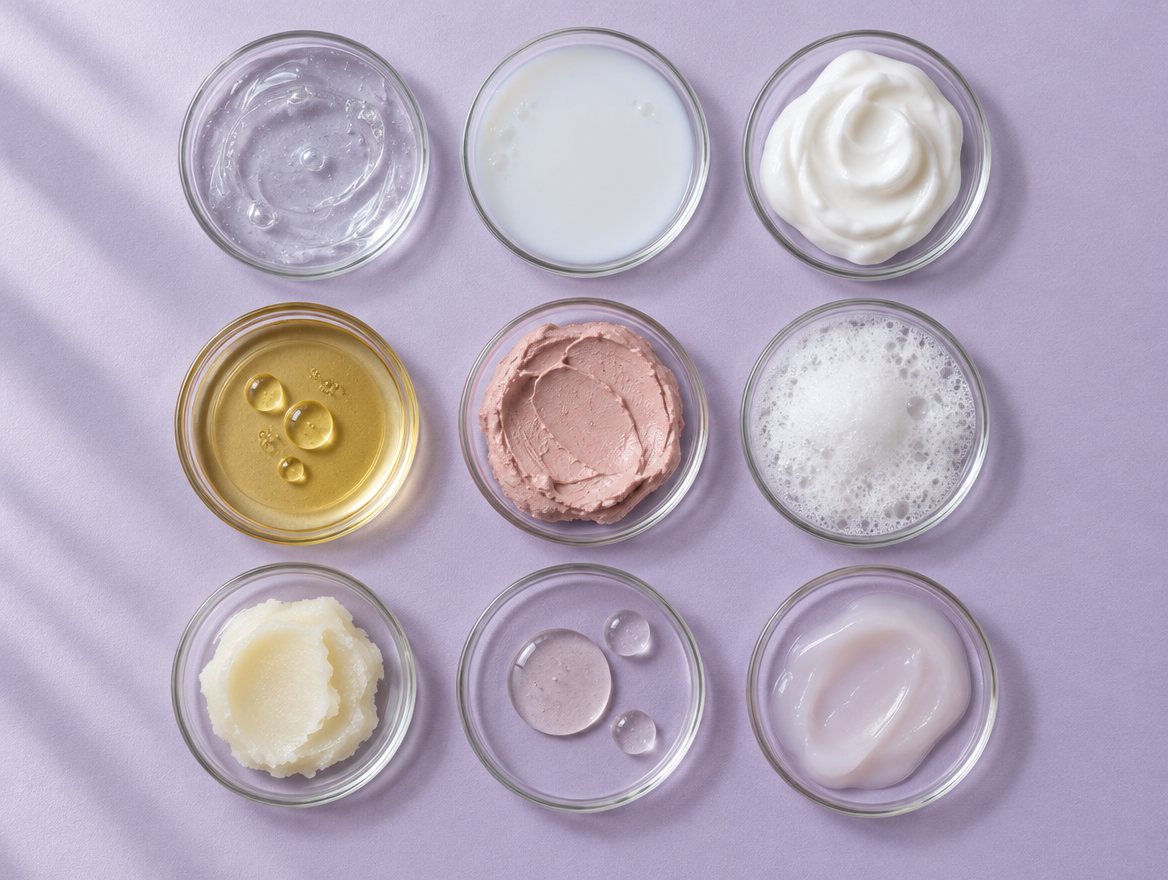
- Get samples of existing formulas. Manufacturers with a formula library can send samples without development costs. We send library samples free for qualified projects, in about 10 to 14 days from your brief (request samples).
- Test on real skin. Use them for a week, then share them with a handful of people who match your customer. Ask what they would pay, not whether they like it.
- Build a waitlist. One page with a clear photo, the price and an email field. Share it where your customers already spend time.
- Set a go or no-go number in advance. For example 150 sign-ups or 40 paid pre-orders. If you miss it, change the product or the pitch before you spend on stock.
How to start a skincare line with no money: the lean budget
This is the cash you need to start a skincare brand with almost no money, before your first sale, if you do the design, photos and marketing yourself. The production line uses our starting prices; the rest are typical market ranges.
| Item | Cash needed | Notes |
|---|---|---|
| Library samples | $0 | Free for qualified projects |
| 500 units of one product | $1,050 to $1,850 | Toner to serum, stock bottle, one-color label |
| Freight, duty, clearance | $700 to $1,300 | Typical for air freight to the US |
| Online store | $5 to $39 a month | Shopify Starter or Basic, US prices |
| Liability insurance | $50 to $100 a month | Typical, paid monthly |
| Trademark | $0 to $350 | Free USPTO search; filing is $350 per class |
| Barcode | $0 to $30 | Only for Amazon or shops (GS1 US) |
| Design, photos, marketing | $0 | Your time |
| Total before first sale | About $2,000 to $3,500 | Less any pre-order income |
The freight line includes US duty, which is 12.5% of the goods value for products of South Korea as of September 2026. For the fuller budget with branding, photos and a three-product routine, see how much it costs to start a skincare line.
Why one hero product at the smallest minimum
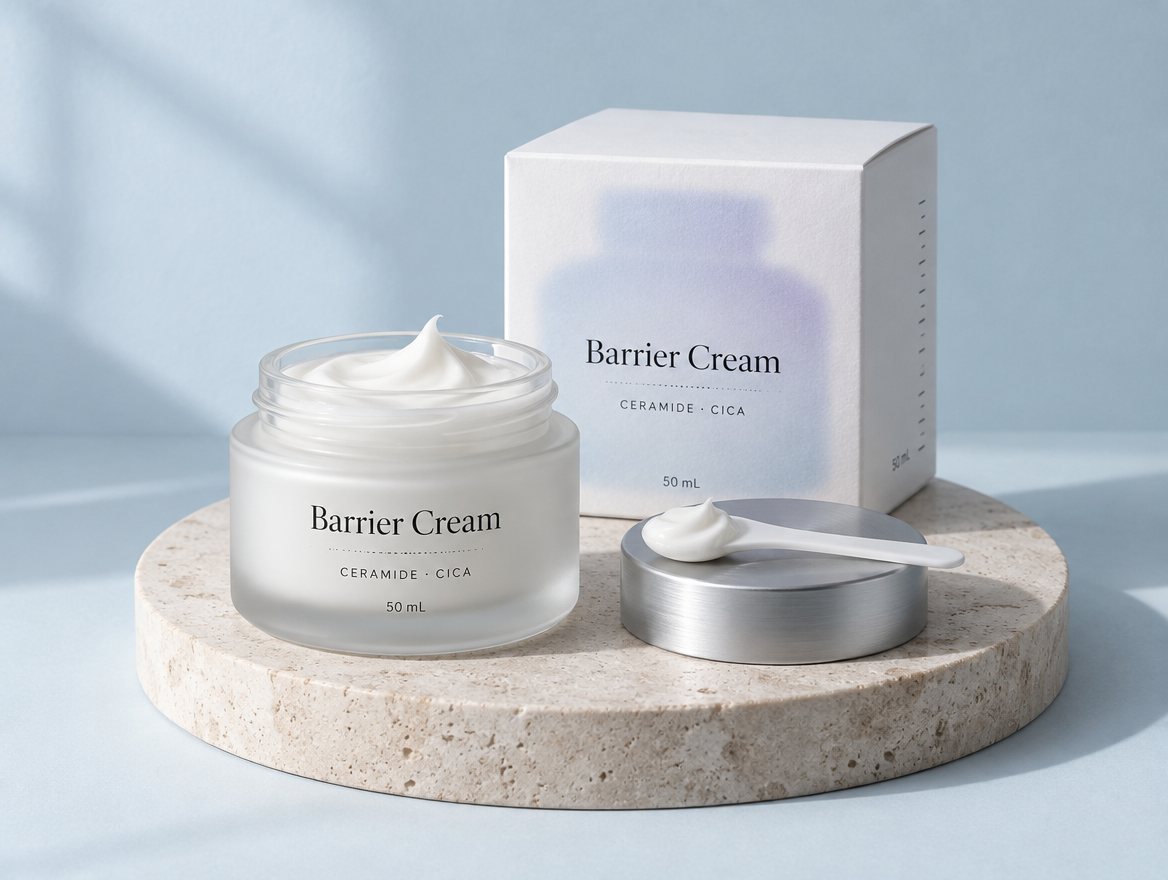
One product at the lowest minimum keeps your risk small. At KoreanOEM most skincare starts at 500 units: a private label toner from $2.10 per unit, so $1,050 for the run, or a serum from $3.70 per unit ($1,850). Starting prices include a library formula, a stock container and a one-color label.
If 500 units still feels like too many, smaller trial runs of library formulas are possible on request. Pick a product people use up and rebuy, that leaves room in the price for shipping and fees, and that photographs well. Toners, serums and cleansers tick all three boxes.
White label or your own formula when money is tight
White label (a library formula under your brand) is the cheapest route: no development fee, free samples, and about 10 weeks from brief to delivery. You still choose the container, the label and the claims. A custom formula carries a development fee, credited against your first order, takes 12 to 16 weeks, and stays yours with the full INCI list.
With little money, start white label and move to a custom formula once sales tell you what customers want. Our guide to OEM, ODM and private label explains the trade-offs.
Pre-orders and crowdfunding: let customers fund the first run
Pre-orders suit our payment terms: you pay a deposit when you order and the balance before shipment, so pre-order money collected during production can cover the balance. In the US the FTC's Mail Order Rule applies. You need a reasonable basis to ship within the time you state, or within 30 days if you state none, and if you slip you must get the customer's consent to the delay or cancel and refund promptly.
So publish an honest ship date that includes shipping from Korea, and keep enough cash to refund. Our 10-week launch plan shows when each step happens.
Crowdfunding is the public version. Kickstarter is all or nothing: backers are charged only if you reach your goal, and it keeps a 5% fee plus payment processing of about 3% to 5%.
Its rules prohibit items that claim to cure, treat or prevent illness, and projects must create something new to share. A campaign works best with a real story and an audience you can bring, so read the platform's rules before you build the page.
How to start a skincare line with no money online
Keep fixed costs near zero
- Store: Shopify's Starter plan is $5 a month in the US and sells through social media and product links. Basic, a full store, is $39 a month or $29 billed yearly (2026 prices).
- Fulfillment: pack orders yourself until volume makes a warehouse cheaper than your time.
- Content: daylight, a phone and a plain background. Film the unboxing of your first shipment.
- Ads: none until organic posts and creators show you which message sells.
- Insurance: pay monthly to spread the cost.
Partners who can carry part of the cost
- Creators on commission. Pay a share of each sale through an affiliate code instead of an upfront fee.
- Estheticians and salons. They sell to clients they already see and can order a starter stock at wholesale.
- Local shops. Retailers typically expect to double the wholesale price, so they pay about half of retail, but every wholesale order is stock already sold.
- A co-founder. Someone who brings an audience, a skill you would otherwise pay for, or part of the budget.
What not to cut: labels and compliance
Relabeling, recalls and marketplace takedowns cost far more than doing it right, and most cosmetics rules apply to a one-person brand as much as to a large one.
- A correct label. In the US: ingredients in descending order, net quantity, your name and place of business, and a US address, phone number or website for adverse event reports. Our team writes compliant label copy with your order.
- Safety and testing. Under MoCRA the brand must keep records that substantiate the product's safety. Stability and challenge tests are planned into every project we make, so do not strip them out to save money.
- MoCRA duties. Businesses with average yearly US cosmetics sales under $1 million (adjusted for inflation) over the previous three years can be exempt from FDA registration and listing, except for some product types such as those that regularly touch the eye's mucous membrane. Labeling, safety substantiation and adverse event reporting still apply.
- Honest claims. "Hydrates" and "smooths the look of" are cosmetic claims. "Treats acne" or "heals" makes the product a drug under US law.
How to start a skincare brand from scratch, step by step
- Weeks 1 to 2: choose one product and one customer, request library samples and a written quote, which arrives within one business day.
- Weeks 2 to 4: test samples, open the waitlist and search the USPTO database for your brand name.
- Week 4: check your go or no-go number, approve the sample and pay the deposit.
- Weeks 4 to 10: approve the label, open pre-orders with an honest ship date and share the making-of.
- Around week 10: pay the balance, receive the goods, ship pre-orders and ask for reviews.
- After launch: reorder (4 to 6 weeks) when sell-through supports it, and add a second product only then.
Once the first run sells, check your margins per channel in is a skincare business profitable.
Frequently asked questions
Can I start a skincare line with $500?
Can I make skincare at home and sell it?
How do I get free samples from a skincare manufacturer?
Can pre-orders pay for my first production run?
Sources
- FTC: Business Guide to the Mail, Internet, or Telephone Order Merchandise Rule
- Kickstarter: Fees (United States)
- Kickstarter: Our Rules
- Shopify pricing
- FDA: Modernization of Cosmetics Regulation Act of 2022 (MoCRA)
- FDA: Small Businesses and Homemade Cosmetics Fact Sheet
- FDA: Is It a Cosmetic, a Drug, or Both?
- 21 U.S.C. 364e, Labeling
- eCFR: 21 CFR Part 701, Cosmetic Labeling
- USPTO fee schedule
- USTR: Notice of Actions in Section 301 Investigations (July 2026)
- Faire Help Center: Pricing policy and retailer margin