Skincare packaging: how to choose containers, materials, decoration and labels
How to match each formula to the right bottle, jar, tube or vial, what the label must say in the US and EU, and where stock packaging saves money on a first run.
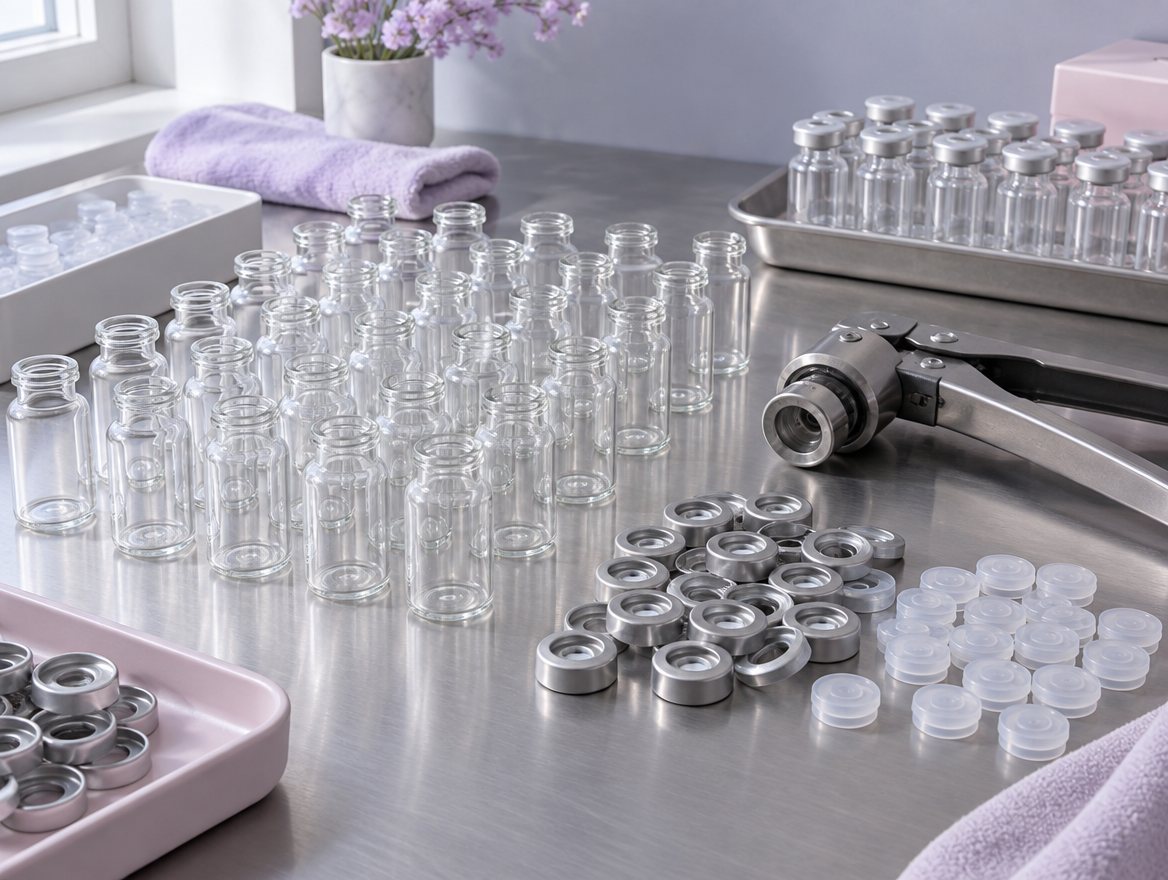
Good skincare packaging protects the formula first and sells it second. Match the container to the texture and to what the formula is sensitive to: droppers or airless pumps for serums, jars for thick creams, tubes for cleansers and sunscreen, crimp vials for single-dose ampoules. Then choose a compatible material, affordable decoration and a compliant label.
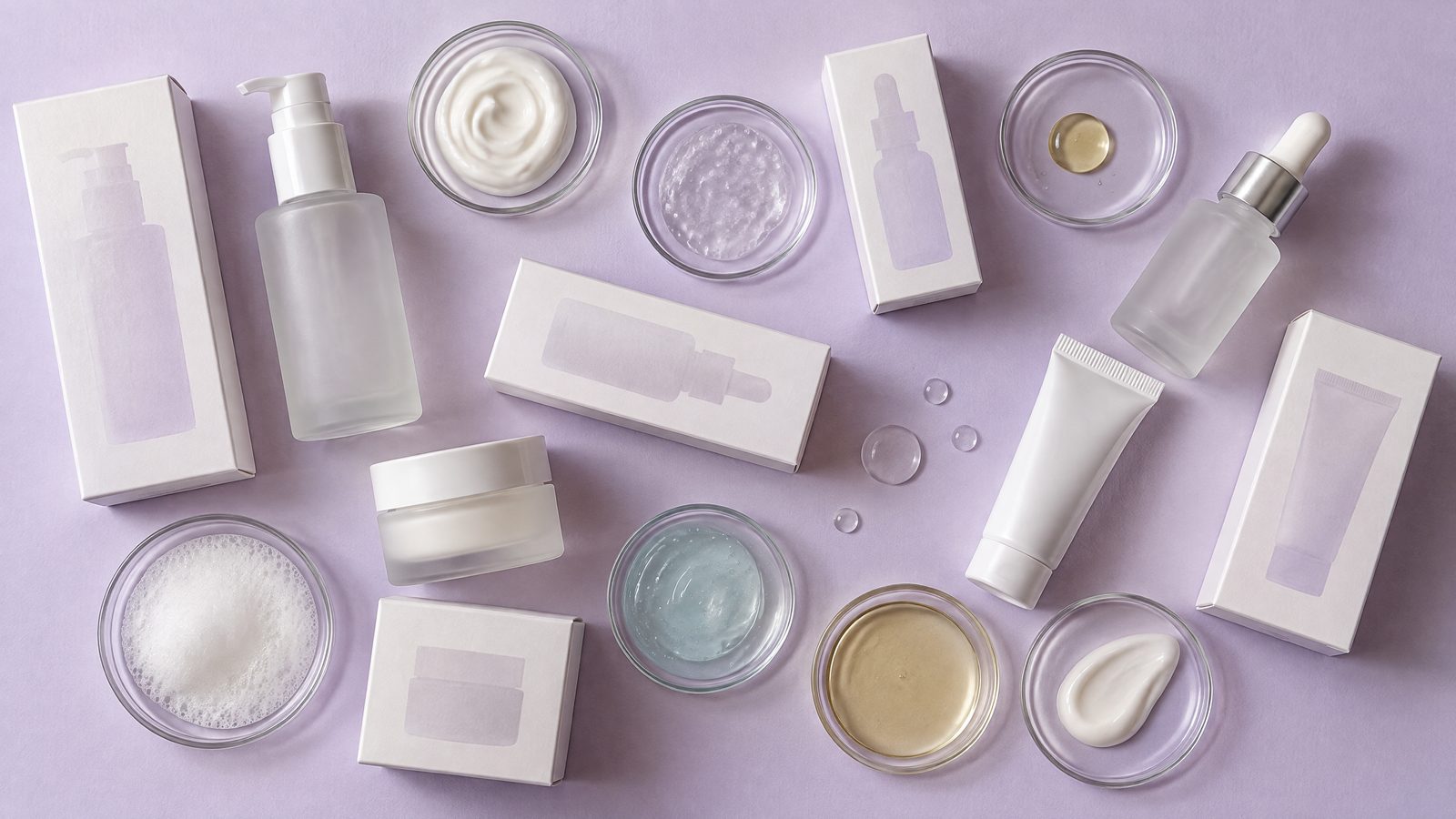
Which container suits which product
Texture decides the dispenser. A pump needs a formula that flows, a jar can hold a cream too thick for any pump, and a mist sprayer only works with thin, watery liquids.
| Container | Best for | Watch out for |
|---|---|---|
| Dropper bottle | Serums, ampoules, face oils | Thick textures will not draw up; glass can break in transit |
| Airless pump | Serums and creams sensitive to air | Higher unit cost; mixed materials are harder to recycle |
| Jar | Rich creams, sleeping masks, balms | Fingers go in daily, so preservation must be strong |
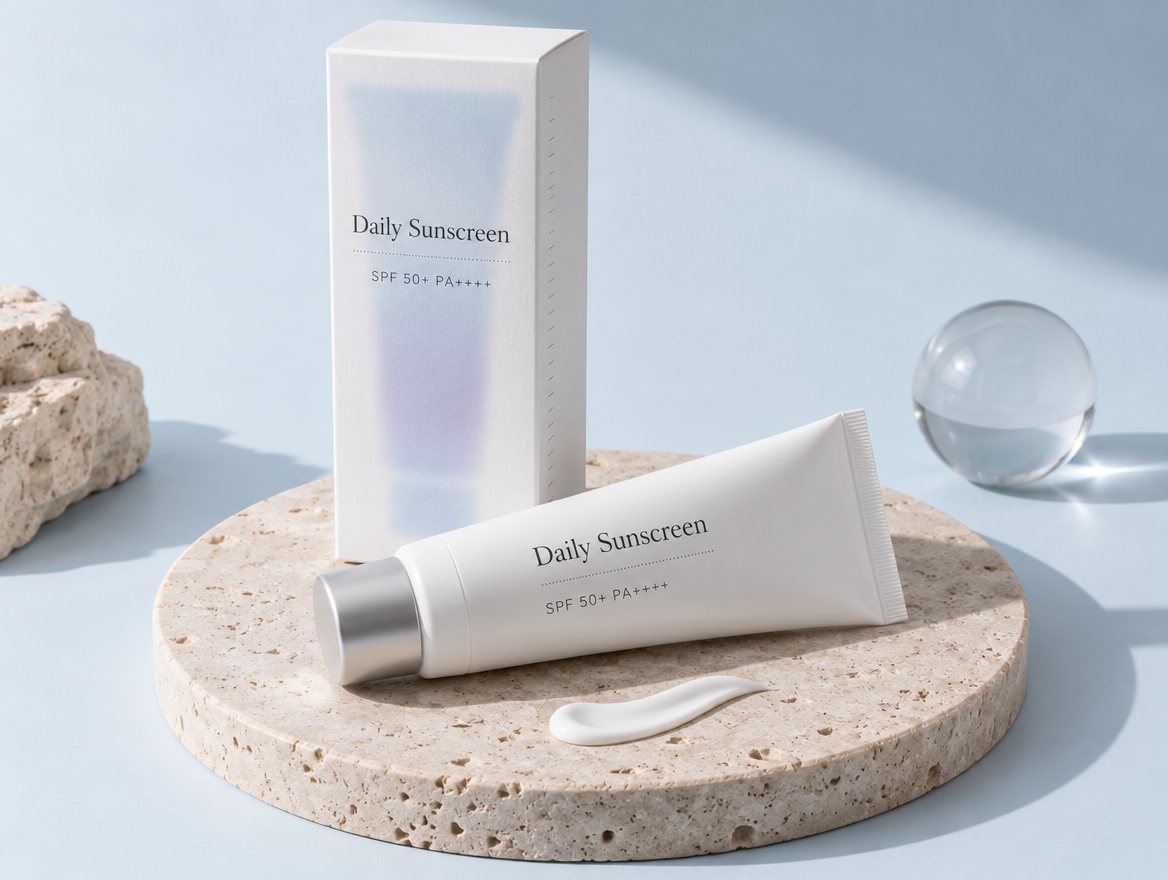
| Tube | Cleansers, sunscreen, hand and eye cream | Oils and fragrance can soak into some plastics |
| Lotion pump | Lotions, cleansing oils, body wash | Needs a lock or clip for shipping |
| Mist sprayer | Mists and toners | Thin liquids only; particles clog the nozzle |
| Crimp vial | Single-dose ampoules, trial kits | One use only; sealed with a crimp at filling |
| Sachet | Samples, travel sizes, single-use masks | Tiny print area and higher minimums |
At small volumes, most private label skincare bottles, jars and tubes come from stock ranges, and a first collection rarely needs more than three or four formats. See how that works for a private label serum or a treatment ampoule in crimp vials.
Airless pump vs jar: which should you choose?
An airless pump pushes the product up with a piston, so air does not flow back into the container and fingers never touch the formula. That matters: the FDA notes that fingers dipped into a product add bacteria and fungi, and that air and sunlight can change a product's color, texture and smell over time.
Choose airless when the formula contains ingredients that oxidize or discolor, such as vitamin C or retinol, when the texture is a light cream or serum, or when you want very little product left behind. It costs more per unit and does not dispense very thin or very stiff textures well.
Choose a jar for rich creams, balms and masks, where customers expect to scoop. A jar is fine as long as the preservative system passes a challenge test, which checks how the formula copes with microbes introduced during use. At KoreanOEM, stability, challenge and patch tests are planned in, and a cream starts from $3.10 per unit at 500 units with a stock jar and a one-color label.
Materials: PET, PETG, PP, PE, glass and recycled content
The material has to suit the formula, not only the look:
- Glass: the most inert option and the natural choice for face oils, ampoules and formulas rich in essential oils or strong actives. It is heavy, breaks and costs more to ship.
- PET: clear, light and shatter resistant. The workhorse for toners, mists, essences and lotions.
- PETG: glass-like clarity with thick walls, used for premium-looking jars and bottles.
- PP (polypropylene): good chemical resistance and slightly cloudy. Used for jars, caps, pumps and the inner parts of most airless packs.
- PE (LDPE and HDPE): soft squeeze tubes and opaque bottles for cleansers, shampoo and body wash. Some fragrance components, limonene for example, are absorbed into polyethylene, so oil-rich or heavily scented formulas need testing.
- Recycled content (PCR): post-consumer recycled resin in PET, PP or PE. Expect a slight tint or specks, and test it like any new material.
No compatibility chart replaces a test in the real container. ISO/TR 18811, the international guideline on cosmetic stability testing, covers stability in the final package, so test the formula in the bottle you will sell. Our guide to cosmetic stability testing explains what to ask for.
Decoration and packaging design ideas
Decoration is where budgets drift, so know what each method costs to set up.
- Printed labels: paper or film, applied after filling. The cheapest to set up and change, ideal for a first run; clear film gives a printed look.
- Silk screen: ink printed straight onto the container, one color per pass. Durable and premium, but every color adds setup.
- Hot stamping: metallic foil pressed on with heat, common for gold or silver logos on caps and jars.
- Shrink sleeves: printed film that wraps the whole bottle, making a stock shape look fully custom.
- Coatings: frosted, colored or soft-touch finishes sprayed onto glass or plastic.
Some skincare packaging design ideas that need no custom mold: a frosted stock bottle with a one-color logo, a clear film label on amber glass, a hot-stamped cap as the only accent, or a plain bottle inside a boldly printed carton. KoreanOEM starting prices assume a stock container and a one-color label; custom colors, silk screen or hot stamping and printed boxes are quoted separately, and the team adapts your logo and writes the label copy. The packaging page shows the stock ranges.
Cartons and outer boxes
A folding carton adds cost, but it protects the bottle in shipping and gives you room for ingredients, directions and translations. In the US, ingredient labeling and the net quantity on the front panel apply to the outer container, so a carton can carry them, while statements required under the FD&C Act, such as warnings, must also appear on the inner container.
Many online brands skip boxes on tubes and pumps to save cost and waste, while spa and retail shelves often prefer boxed products.
Stock vs custom packaging: minimums and lead times
Stock packaging means containers a supplier already makes in standard sizes and colors. There is no mold to pay for, and only the decoration changes. For low MOQ skincare packaging, stock is the answer. At KoreanOEM, stock bottles, jars, tubes, vials and pumps carry no tooling cost, and a serum starts from $3.70 per unit at 500 units with a library formula, a stock bottle and a one-color label.
Custom packaging covers anything made to order: a new mold, a matched color, direct printing or a printed box. Each adds a supplier minimum and weeks to the schedule, and a new mold adds a tooling cost, so it usually pays off only at large, repeat volumes.
| Option | Extra setup | Good for |
|---|---|---|
| Stock container, printed label | None | First runs, testing a product |
| Stock container, silk screen or foil | Screens or plates | Reorders of proven products |
| Custom color or shrink sleeve | Color match or print setup | A signature look without a mold |
| Custom mold | Tooling cost and sampling time | Large, stable volumes |
With a library formula and stock packaging, KoreanOEM plans about 10 weeks from brief to delivery; custom packaging elements are quoted separately. A practical path is to launch in stock packaging, learn what sells, and upgrade the decoration on the reorder. If you run a spa, our guide to private label skincare for estheticians covers backbar and retail sizes.
What must be on the label in the US and the EU
Label rules drive container size more than founders expect, because everything must fit legibly. The key elements as of 2026:
United States
- The product's identity and its net quantity on the front panel, in both metric and US customary units, for example 30 mL (1.01 fl oz).
- The name and place of business of the manufacturer, packer or distributor.
- The ingredient list in descending order of predominance, for products sold to consumers.
- Warning statements where the regulations require them.
- A US address, US phone number or electronic contact such as a website for adverse event reports, required by MoCRA from December 29, 2024.
- The country of origin on imported products, for example Made in Korea.
US law does not require an expiration date on cosmetics, but sunscreens and acne treatments are regulated as drugs and do need one. MoCRA will also require fragrance allergens to be named once the FDA sets the list by regulation, so check the status before a large print run.
European Union
- The name and address of the EU responsible person, plus the country of origin for imported products.
- The nominal content by weight or volume.
- A best before date, or the period after opening symbol (the open jar) when the product keeps for more than 30 months.
- Precautions for use, the batch number and the product's function when it is not obvious.
- The ingredient list, headed "Ingredients", which may appear on the outer packaging alone.
Each member state sets the language for most of these items. For other markets, see our guide to exporting Korean skincare.
Sustainability claims: say less, prove more
Green claims are regulated on both sides of the Atlantic.
- United States: the FTC Green Guides advise against unqualified general claims such as "eco-friendly". A package can be called recyclable without qualification only when recycling facilities are available to at least 60 percent of the consumers or communities where it is sold, and partial recycled content should be stated as a percentage.
- European Union: Directive (EU) 2024/825 bans generic environmental claims such as "eco-friendly", "green" or "biodegradable" unless the trader can show recognized excellent environmental performance. Member states apply it from 27 September 2026. The Packaging and Packaging Waste Regulation (EU) 2025/40 applies from 12 August 2026 and adds a harmonized sorting label from August 2028 at the earliest.
Specific, provable wording is safer and more convincing. "Bottle made with 50% post-consumer recycled PET" is clear and checkable, as long as the resin supplier's documents back the number.
Frequently asked questions
What is the cheapest packaging for a new skincare brand?
Is an airless pump better than a jar for skincare?
What is the minimum order for custom skincare packaging?
What has to be on a skincare label in the US?
Can I call my skincare packaging eco-friendly?
Sources
- FDA: Summary of Cosmetics Labeling Requirements
- FDA: Shelf Life and Expiration Dating of Cosmetics
- 15 U.S.C. 1453: Requirements of labeling (Fair Packaging and Labeling Act)
- 21 U.S.C. 364e: Labeling (cosmetics, MoCRA)
- 19 CFR 134.11: Country of origin marking required
- Regulation (EC) No 1223/2009 on cosmetic products, Article 19
- 16 CFR Part 260: Guides for the Use of Environmental Marketing Claims
- Directive (EU) 2024/825 on empowering consumers for the green transition
- Regulation (EU) 2025/40 on packaging and packaging waste
- ISO/TR 18811:2018 Cosmetics: Guidelines on the stability testing of cosmetic products
- Limm et al., Diffusion of limonene in polyethylene (Food Additives and Contaminants, 2006)